

A gas range arrives with a manual, a flexible connector, and fittings that look no more serious than the shutoff valve under your kitchen sink. If you’ve framed a wall or run a circuit, hooking it up can feel like the next reasonable Saturday project. That confidence is the problem.
Gas appliance work is part of a larger fuel-burning system, and Ontario regulates it. Getting into this trade normally means taking a gas technician 3 course. No amount of afternoon video tutorials replaces that training. Even a new G3 certificate holder is limited to a narrow range of duties and works under supervision.
Why does this work sit with certified technicians? Because a joint can look tight and still leak, or an appliance can burn badly and push combustion products into the house or breach equipment requirements. Ontario assigns regulated fuels work to trained certificate holders whose permitted duties turn on their certification class.
The danger isn’t necessarily dramatic. It may be a water heater that lights on the first try, then runs for months with a vent connector that has pulled loose behind the unit.
Why Gas Appliance Work Requires a Licensed Technician
The hazard extends beyond the threaded connection
A fitting can be mechanically tight even when the appliance behind it is set up incorrectly. Manifold pressure may be off. Combustion air may be inadequate for a sealed utility closet, or the vent may be sized and pitched for the appliance that was there in 1998, not the one installed last week.
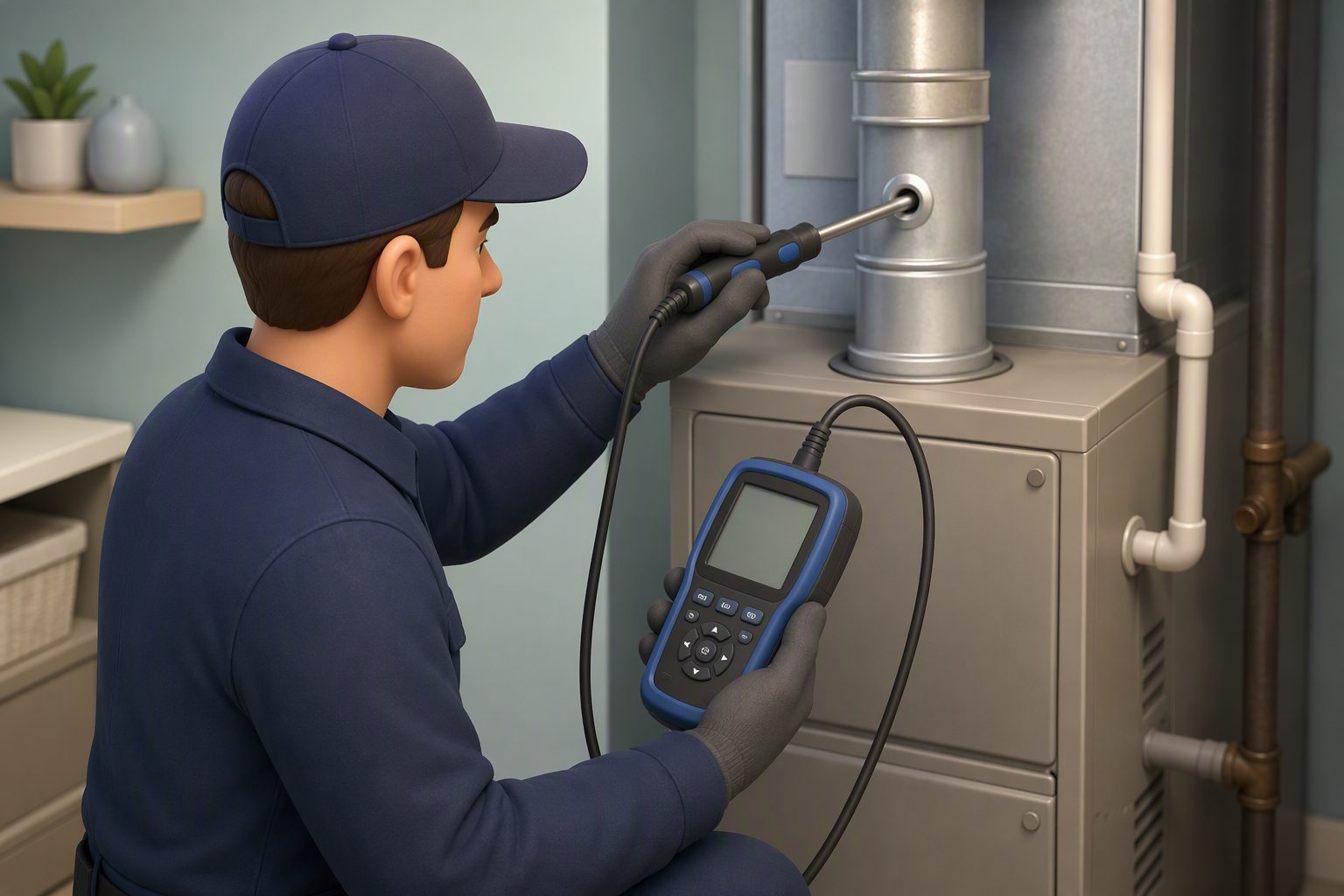
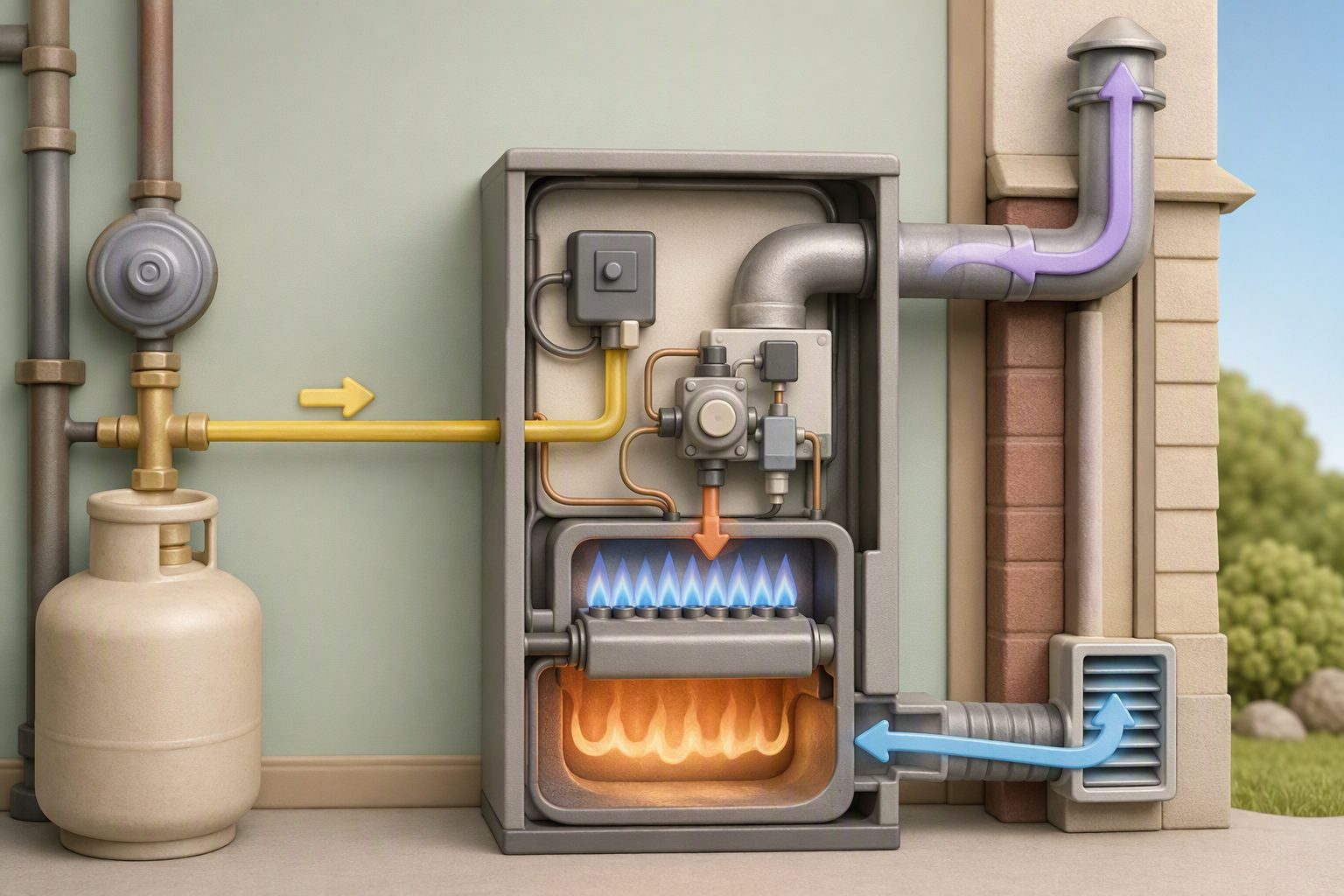
Some terminology helps. BTU/h is the appliance’s hourly heat-input rating, and it drives many installation decisions. Combustion air is the air the fuel needs to burn properly. Venting is the pathway that carries combustion products outdoors. Commissioning is the set of checks and adjustments a technician performs before putting equipment into service. That is the step a do-it-yourself installation most easily misses, because a lit burner proves nothing about whether the appliance was properly tested and adjusted.
Carbon monoxide offers little warning
Incomplete combustion or a failed vent can produce carbon monoxide. Unburned natural gas or propane creates a second hazard: fuel accumulating in a space can ignite or explode. The odorant added to fuel gas can alert occupants to some leaks, but it does not warn of carbon monoxide and never replaces instrument-based inspection.
A flame is not proof of safety.
Install certified carbon monoxide alarms where the manufacturer and local requirements direct. If an alarm sounds or you smell gas, get everyone outside and call the gas utility or emergency services from a safe location. Do not search for the source.
Certification creates defined competence and accountability
Regulated fuels work in Ontario falls under the province’s governing safety legislation and its regulations. That legal framework defines how regulated fuels work is administered. The TSSA runs the fuels-safety framework. A technician’s certification defines a scope of practice, backed by working knowledge of the safety rules and codes that apply.
Ontario-approved training programs require candidates to prove themselves twice: in theory and in hands-on practice. Finishing a course doesn’t grant anything on its own. The person still has to earn the applicable certificate and work within its scope.
None of this means a homeowner may never touch a gas appliance. Ordinary owner tasks appear later in this guide. The boundary is regulated fuel work.
NOTE: Appliance instructions do not override Ontario law or the conditions attached to a technician’s certificate.
What Usually Counts as Regulated Gas-Appliance Work?
Where the line sits turns on the appliance, the fuel, the work being performed, and the certificate held by the technician. Site conditions and current Ontario requirements matter too. Other jurisdictions use different certificate names and may draw the boundaries elsewhere.
Fuel piping and appliance connections
Installing new natural-gas or propane piping is regulated work. Extending or relocating existing piping is, too. That includes the appliance shutoff and final fuel connection, which homeowners can easily mistake for ordinary plumbing.
Replacing a gas range or moving a dryer across a laundry room involves a regulated connection. Adding a gas fireplace insert or running a permanent supply to an outdoor appliance can cross the same line.
Furnace and water-heater replacement
In Ontario, homeowners should leave the regulated gas components of a furnace or water heater alone. Fuel piping, gas controls, venting, and commissioning belong to work an appropriately certified technician is authorized to perform.
One certificate does not authorize every connected trade. A furnace replacement can involve line-voltage wiring, condensate drainage, and local permit requirements on top of fuels certification. If the electrical side is unfamiliar ground, Electrical 101 for Homeowners explains why electrical work has its own safety and authorization requirements.
Natural-gas and propane hookups
Changing fuel type is not a matter of matching a fitting. Natural gas and propane operate under different conditions and can require different burner components. The appliance’s certification and rating plate lists its approved fuel. Propane is heavier than air, so a leak can settle and pool in low areas.
Appliance conversions and control changes
A conversion involves more than changing an orifice. Approved conversion components and regulator adjustments may be required, along with labelling and testing to the manufacturer’s specifications. The procedure may require combustion verification using instruments a homeowner is unlikely to own or know how to use.
Do not improvise a fuel conversion. Never bypass a switch or jumper a safety control.
Before work begins, confirm what your municipality requires. Understanding When You Need a Building Permit explains how local permit and inspection requirements can apply to mechanical work.
What a Homeowner Can Do Without Crossing the Gas-Work Line
Manufacturer instructions and local rules still apply, so read the appliance manual before doing any maintenance. The categories below describe owner-serviceable work in general terms. They are not repair procedures:
- Put fresh batteries in accessible controls or alarms, following the manufacturer’s directions.
- Clean or swap out filters marked as homeowner-serviceable.
- Keep combustion-air openings and exterior vent terminations clear. Do this without taking anything apart.
- Stay alert for odours, soot, sudden shutdowns, or visible damage.
- Have a certified technician with the right scope perform and document any service.
Removing a sealed cover or disturbing a fuel connection can cross into regulated work, as can changing burners or altering venting. Repeatedly resetting a safety device is dangerous in its own way, because the device may be responding to an unresolved fault.
Warning signs that require professional help
Act immediately on a gas smell that will not go away or a carbon-monoxide alarm that sounds. Soot or scorch marks near a burner compartment mean you need a service call, not another reset. The same goes for visible vent damage and repeated ignition lockouts. An unusual flame you can see without opening the appliance fits that category too.
Headaches or nausea with no obvious cause that ease once occupants step outside may signal a serious indoor-air problem. If you smell gas or a carbon-monoxide alarm sounds, get everyone out of the house. Do not touch light switches or anything else that could spark. Call the gas utility or emergency services from a safe location.
Verify the person, not the truck
Ask which certificate class the technician holds, and make sure the assigned work falls inside that scope. Ask what documentation you will receive when the job is finished. The Technical Standards and Safety Authority publishes current certification and public-safety information that consumers can consult.
TIP: When booking service, describe the appliance, its fuel, the input rating on its data plate, and the symptoms you have observed. Those details help the contractor send a technician whose certificate and experience match the work.
How Ontario’s Gas Technician Certification Tiers Work
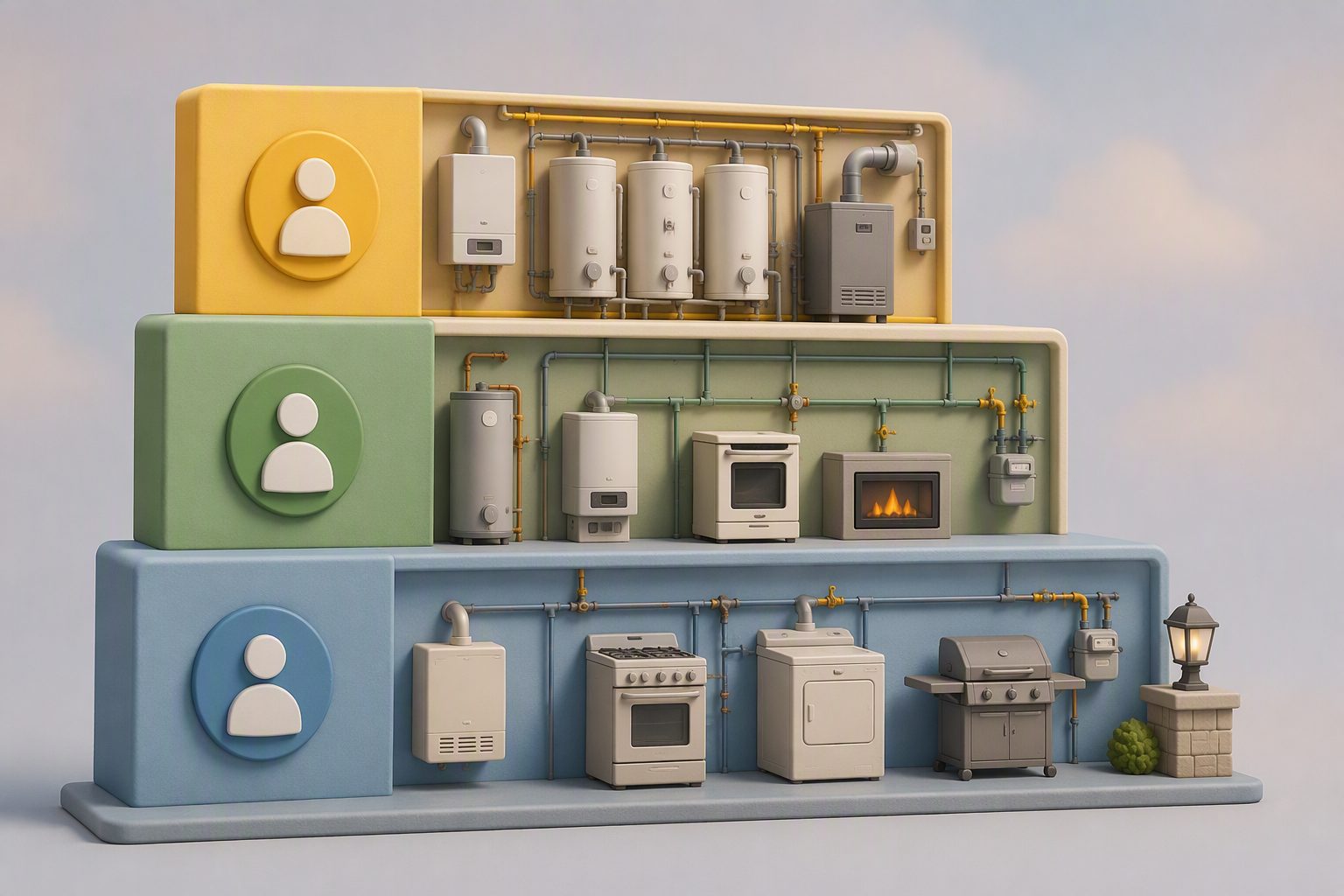
In Ontario, these classes correspond to the TSSA’s G3, G2, and G1 certification levels. The privileges attached to each class depend on current regulations and any conditions that apply to the certificate. Check the current scope before relying on a general summary.
| Certificate | Practical description | Key limitation |
|---|---|---|
| G3 | Entry-level gas technician certificate | The holder must work within the limited G3 scope and under the required supervision |
| G2 | Certificate covering a broader range of gas-appliance work | Generally limited by appliance input, with current regulatory exceptions and conditions applying |
| G1 | Highest of the three standard gas-technician certificate classes | Broader input capacity does not replace equipment-specific or other trade requirements |
G3 means supervised entry-level work
A Gas Technician 3 certificate is Ontario’s entry-level gas-technician credential. A G3 holder may perform only the tasks permitted by that class and must work under the supervision required by Ontario rules. It is not authorization to perform unrestricted gas work independently.
The 400,000 BTU/h input threshold matters to Ontario’s certificate structure, particularly for distinguishing the appliance capacity associated with G2 and G1 work. A G3 holder’s authority is limited further by the specific tasks and supervisory conditions set out for that certificate. Check the current regulatory wording before assigning work.
G2 and G1 expand the permitted scope
You do not move up by clocking time alone. A higher class requires additional qualifications, and experience prerequisites can apply. A higher gas-technician certificate never substitutes for authorizations needed for electrical work, plumbing, refrigeration, or specialized equipment.
Why “Level 3 HVAC” is not an Ontario credential
Ontario’s G3 certificate is a specific fuels credential with a defined scope. The label “Level 3 HVAC technician” can mean a school level, an apprenticeship stage, an employer classification, or a credential from another jurisdiction. It is not a substitute for the certificate.
What a Gas Technician 3 Course Teaches and Who Needs It
Entry-level training combines theory with controlled practice
A gas technician 3 course provides entry-level training for people pursuing Ontario’s G3 certification. It is not a homeowner workshop for do-it-yourself appliance installation. Coursework blends fuels safety and code interpretation with instrument use, supervised practical work, and piping and appliance fundamentals.
Theory matters because many appliance decisions require judgment. Understanding how propane behaves in a below-grade room, or why the rise of a vent connector matters, affects what a technician does when the installation drawing and the actual building conditions disagree.
Who the course is for
The credential serves people entering gas service or HVAC work, plus appliance-service, plumbing, and mechanical-trade workers who need an entry-level fuels certificate before performing regulated gas work.
Homeowners do not need G3 training to own an appliance or to complete maintenance the manufacturer identifies as owner-serviceable.
Prospective Ontario technicians can review the current gas technician 3 course to compare admission requirements, hands-on training, scheduling, included materials, and exam preparation.
What the training demands
The training is demanding. It combines code interpretation, fuel properties, and combustion principles with electrical fundamentals, technical drawings, and practical evaluation. Candidates must demonstrate accuracy while following safety procedures.
No school can guarantee an examination result. Admission and completion requirements differ by program, so read the current terms for the specific approved program before applying.
How candidates earn a G3 certificate in Ontario
- Confirm current eligibility and select a TSSA-accredited training provider.
- Complete the required theory and practical training.
- Meet the program’s completion standards.
- Pass the applicable certification examination.
- Complete the current certification process and work only within the G3 scope and supervision requirements.
Training Costs Vary by Program
Tuition varies by school, with schedule, included materials, tool access, and examination fees all playing a part. Confirm the current total with the school before enrolling, including which codebooks and equipment are covered and what fees and supplies are extra.
Career Outlook for Ontario Gas Technicians
Where gas fitters find work
The Government of Canada’s Job Bank outlook for gas fitters rates Ontario’s prospects as moderate for 2025 through 2027. Job Bank identifies employment growth and retirements as sources of openings during that period, though conditions vary by region and employer.
Work settings can range from new construction to maintenance contracts, depending on the employer and equipment.
Employment can include business ownership
Some experienced gas fitters go self-employed, but running a business demands more than technical skill. Insurance and registration paperwork pile up. Recordkeeping becomes a job in itself. Supervising employees is a separate skill entirely.
Qualifications Gas Technicians Need
Qualifications shift with the role and the jurisdiction. In Ontario, regulated gas work requires the applicable certificate class, and the work must fall within that class’s scope. Employers may want a valid driver’s license or workplace safety training, and some ask for experience with particular systems. Those hiring requirements are distinct from the legal authority granted by a fuels certificate.
The Safe Boundary for a Capable DIY Homeowner
The boundary is clearer than it may seem at first. You can observe how an appliance behaves, keep owner-serviceable items clean, and record when a problem began. Then hire a certificate holder whose scope matches the work required.
Do not treat fuel piping, burner setup, vent alterations, or gas-control changes as ordinary DIY work. Local permits and utility rules can add obligations, and so can manufacturer instructions and current provincial requirements. Verify what applies before work begins, not after an inspector identifies a hazardous installation.
When performed incorrectly, gas and combustion work can burn a house down or fill it with carbon monoxide. Check with the gas utility and your local building authority before regulated work begins, and consult the manufacturer’s documentation. Hire an appropriately certified technician, and if you smell gas or a carbon monoxide alarm sounds, leave immediately and call for help from a safe location.