
By Mark Clement
Tips and tricks for working with plaster walls—from pulling it down to patching it up.
If you live in a house built before 1940, you almost certainly have plaster walls and ceilings.
At its best plaster makes surfaces uber-hard and sound-deadeningly substantial. At its worst, it’s a brittle wall-covering that’s practically looking for a way to jump off the wall.
Good installation or bad, however, the presence of plaster signifies several things beyond the age of the structure, notably the home probably:
- doesn’t have insulation
- does have lead paint
- doesn’t have many straight lines for easy trim layout.
So whether you’re adding trim or doing a gut-and-rehab on an old house, here’s a few tricks for working with plaster. But first (there’s always a “but first” with me isn’t there?), here’s a little information on what plaster is and why we don’t use it much anymore.
Anatomy of a Plaster Surface
While plaster can be applied directly to block walls it is often applied over a layer of wood lath (2-inch, rough-sawn strips nailed with the world’s sharpest nails). Lath is nailed perpendicular to wood studs or over 1-by fastened to the block.
A proper plaster coat consists of three parts: a scratch coat, a brown coat and a skim coat. In more modest homes, the brown coat might be skimped on or otherwise skipped, which leaves the plaster finish thin and easily damaged. Houses in this condition may well have wallpaper, which was used as decoration as much as to hold the plaster together. (Our house had wall-paper—I’m not kidding—on the ceilings.)
Brief History
The reason drywall is called “dry” is that plaster is applied wet. Drastically oversimplifying the art, it’s like applying increasingly fine grades of site-mixed mortar to the wall surface.
The reason for the switch from plaster to drywall in the 1940s was a combination of the product itself (drywall was invented in the 1890s), a lack of labor (due to the War), and a demand for high-speed installation in homes and factories, again due to the War effort.
Another big reason the industry never shifted back to plaster—aside from the fact that plaster is much more labor-intensive and expensive to install than drywall—was the immediate need to house soldiers returning en masse from the War.
Lead Paint
The first thing to know about plaster is that you have to follow the EPA’s new lead paint regulations when you disturb the paint that’s on it. Called RRP for Renovation, Repair and Painting, lead-safe remodeling practices are the law. And, when you find out what the lead dust can do to your kids, you’ll want to make sure you follow the new rules that center around containing and cleaning lead dust from disruptive activities like demolition, sanding, and paint removal. What’s more, if you’re hiring a remodeler, it’s required by law that they must have passed a Lead Safety Certification course to work with lead paint-coated materials. OK, now on to the good stuff.
Demolition
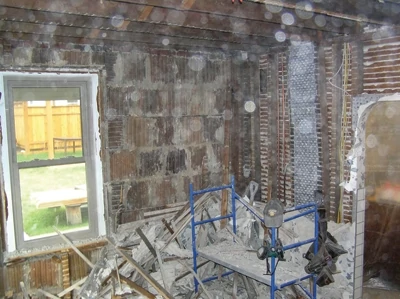
For many homes, the best thing to do with plaster is to remove it. With the walls open, you have the opportunity to insulate and update old plumbing and wiring (pipe and wire is cheapest while walls are open). For a wood-framed house this means dropping the plaster and making the upgrades. Once you close it all back in, if you have a block house, you’ll end up with super-deep window sills and exterior door jambs, which are awesome.
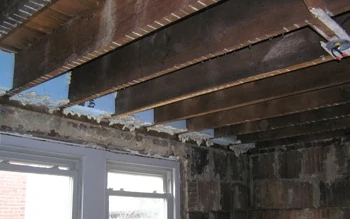
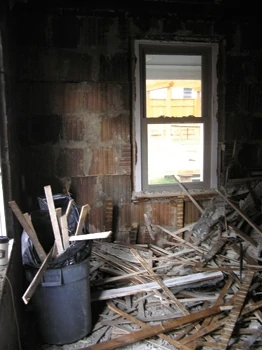
Weights and Measures. If you’re blowing a room back to the studs, think about how much debris you’ll generate and how to dispose of it. A 12-by-12-foot by 8-foot tall room will generate about 3,000 pounds of debris. That easily maxes out a 10-foot long, 5-foot wide utility trailer. Put another way, if you put it all in garbage bags weighing an average of 60 pounds each, that’s 50 bags. Imagine that lined up on the curb for the garage man. If you get a dumpster, which is probably the fastest and easiest, you have to make sure it can fit in—and not damage—your driveway. That’s not always an option.
Pierce and Pry. Despite seeing one used on virtually every home-improvement television show, plaster demolition is the last place you want to use a sledgehammer.
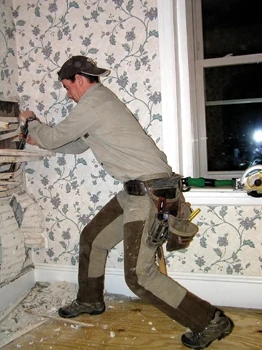
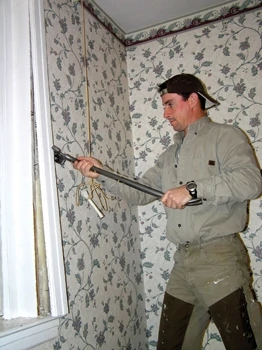
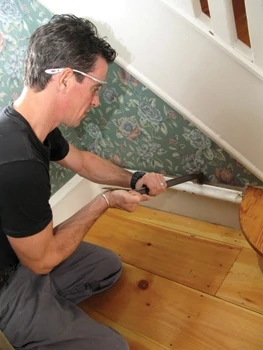
I’ve tried various approaches to demolishing plaster, and the fastest one I’ve found is what I call “pierce and pry.” First, strip all the mouldings. Next use a pry bar of some type to pierce the plaster and get in behind the lath. Then pull. The plaster tends to crumble, while the pulling action is most efficient for releasing the lath nails from the wood. Always wear (despite the photos) a hat, long-sleeve shirt, boots, pants, eye-protection and a dust mask or respirator. No matter how efficient pierce and pry can be, it is a lung-choking dust storm. I use an air cleaner to pull the dust out of the air so I can see.
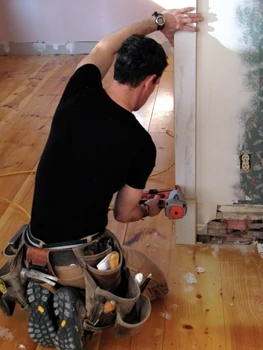
Halo Effect. The one major reason sledgehammers are better for breaking rocks and cast iron bathtubs than plaster is what I call the “halo effect.” In other words, if you’re taking the plaster down in the dining room, but want it to remain intact in the kitchen you can’t go all Ryan Howard on the walls and not expect damage elsewhere. Plaster is inflexible, and the impact vibration sings through the rest of the house.
Plus, sledgehammers are ridiculously heavy. Their mass will cure you of wanting to use one in about an hour.
Where a sledge does make sense is when it is used from above. If you can climb in an attic above a room, use the mass of the sledge to pound the ceiling down. I usually hold it vertically and sort of drop it onto the lath to get a feel for how much force is required to break the connection. A crow bar (much lighter) works here, too.
If you are working above the plaster ceiling of a lower floor, such as removing a bathroom, and you have the subfloor out, check the “keyways” below you (the plaster that squeezed through the lath). If the plaster chunks are broken off, you can expect that the ceiling isn’t hanging on by much.
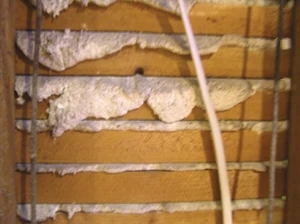
Dust. Seriously, the dust is bad. At the minimum, you want to sheet off the room you’re demolishing with plastic sheeting. You also want to tape off cold air returns and HVAC supplies in and around the room. Again, this is a minimum. We recommend shutting off the air completely during plaster demo and taping off the vents.
It has been common practice to put a box fan in the window and blow the dust outside. While this works to a degree, it is no longer allowed under RRP.
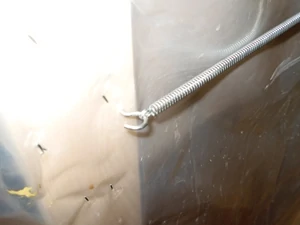
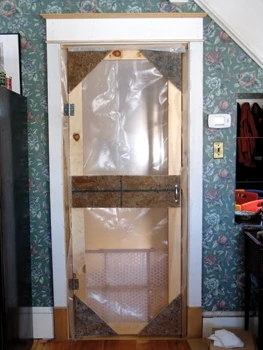
Access.You need access in and out of the work area. Ironically, the access technique shown in the RRP training is a complete sieve. In order to maintain reasonable egress you may want to buy a product like Zipwall or build your own plastic shield, which is what we’ve done. We basically fabricate a screen door and install it on the existing doorjamb. We sheet it with plastic, which we cut a little proud all the way around the door. This forms a gasket when the door is closed, and we keep it closed snugly with a simple screen door spring. Of course, we have a name for this too: We call it a “blast gate.”
Protecting the Floor. The crumbling plaster is hard on a floor. A drop cloth really doesn’t cut it. However, a drop cloth with a couple layers of cardboard beneath it will really help. And—although I haven’t personally tried this product, I will for the next plaster job—recycled billboard tarps reportedly work well. No kidding. They’re thick, tough and big enough for most any room. Folded in half, they look as though they’ll act as a nice cushion for the falling debris.
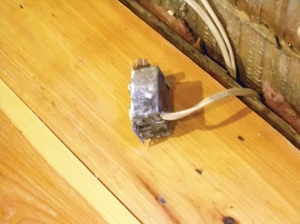
Electrical. Bear in mind, the electrical in the wall is live. Shutting off breakers to the room or otherwise having an electrician delete the power supply is the safest, most efficient way to roll. It should go without saying that this type of project requires a building permit, which we recommend getting.
New Doors. Demolition is far from the only interaction old-house owners will encounter with plaster. Old houses are famous for settling and leaving door jambs frustratingly out of square, requiring new ones be installed when doors are upgraded.
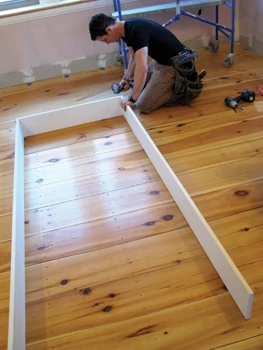
Split-jamb doors can be a good solution here, but their limited trim and door packages might not match your old house mojo, which is why we end up fabricating jambs on site.
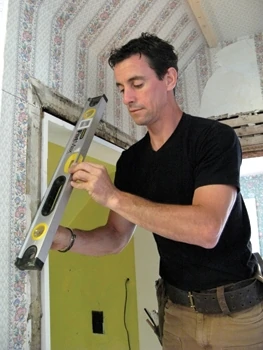
See, the problem with cutting the new jamb to the accurate width is that plaster undulates. In other words it’s thicker on some parts of the wall than others. To get an accurate measurement on how thick the wall is, I measure it from straight-edge to straight-edge in three places—top, middle, bottom. That way I’m sure I can rip the jamb stock wide enough to cover the widest expanse, ensuring that the casing will lay flat and not mess up the miters. I can back-caulk any gaps.
Insulation. Insulating exterior wall cavities isn’t the only place you can tighten the building envelope when the plaster is down. Take the opportunity to seal up places you might not consider obvious, like along the band joist or between ceiling joists. This is an investment that pays back every day in energy savings.
Also, we’ve insulated for sound in our ceilings and partition walls (apparently our home was originally built by Echo Chamber Builders), and it has seriously cut down on the noise transfer between rooms.
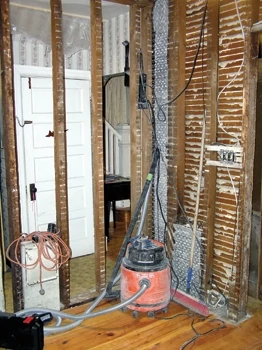
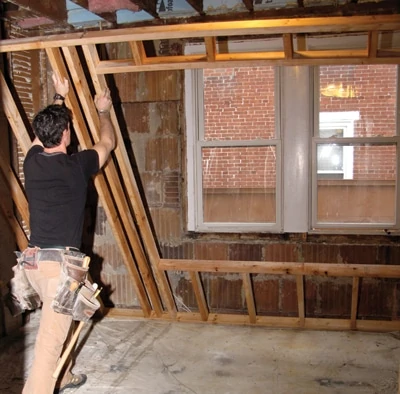
New Framing. For block homes that require new interior stud walls, we’ve found that buying premium framing lumber makes life easier and doesn’t cost much extra, especially if you’re installing cabinets on the new wall. Lower grades of framing lumber aren’t entirely stable and can twist and warp even when nailed in place.
When laying out the new framing (some carpenters call this “detailing the plates”), make sure to follow the pattern of the existing framing as closely as you can. In other words, line up your new studs under existing joists—which were not likely laid out on 16-inch centers. Do this for joists above and if possible below. This makes it easier to pull wire, run a new cold-air return, etc.
Patching
You can patch damaged plaster with joint compound and joint tape. However, plaster has two unique characteristics. In some cases it can develop long, meandering cracks. Joint tape is too thin to follow it for long. Plaster can also get wet from behind (say under a leaking window) and fail in large patches, where joint tape is also too thin to do much good.
In both cases Hyde’s Wet and Set drywall repair tape makes sense for some of these repairs. While it is a straight tape, it is 4 inches wide so it can follow a random line for a longer stretch. Its width, and the fact that it is embedded with fast-drying joint compound during manufacturing, enables it to span long, wider, larger failures.
New Windows
Often when I remove plaster from a room I’m also replacing the windows. The overall thickness of plaster walls changes from the original wall thickness. In cases such as kitchens where I want the sills as deep as possible, I find it’s best to craft what I call a “sleeve” that fits into the rough-opening and into which the new window fits. (It should go without saying that I map all this out before I take the plaster down and order the windows.)
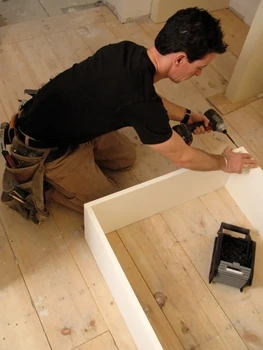
A sleeve is basically a 1-by box, in this case 1-by-12 Fypon PVC moulding. It works well for exterior exposure and works nicely inside for paint-grade finishes.
Nailing
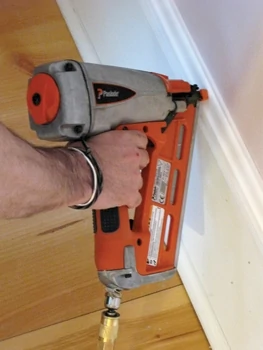
Plaster’s greatness is in its solidity. Try to drive a hand-nail in it while upgrading a room with chair rail or crown, and the nail head will either bend (if the plaster is directly over block), or it’ll just crush the plaster and not really catch anything. Pneumatically driven finish nails, however do catch on lots of plaster. They go in so fast the plaster doesn’t break much, and there’s usually so much wood lath that they catch wood behind the plaster. However, there are also enough gaps in the plaster that there’s a good chance of shooting air, so to be sure—especially on crown—I shoot two nails every 12-16 inches. Instead of shooting them straight in, however, I shoot them in at opposing angles in a V. It increases my chances of making a strong nail-to-wood connection.
Cutting Lath
For small penetrations in plaster, say for installing recessed lights or moving an electrical box, sometimes the toughest thing to remove is the lath beneath the plaster, especially if its flopping around between joist or stud bays. A drywall saw is usually the best approach for getting this cut started, but if the lath is moving then it’s best to cut it off with your diagonal cutting pliers (dykes). This keeps the lath still, protecting the plaster around it while still enabling you to open the wall.
Editor’s Note: Mark and Theresa Clement are the hosts of MyFixitUpLife.