

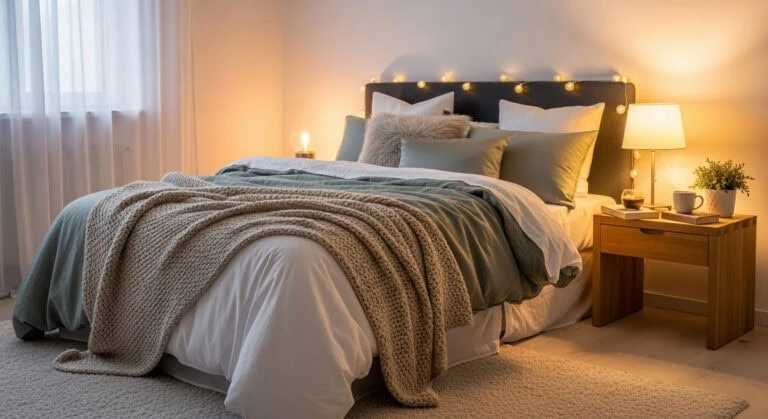
We decorate our bedrooms for how they look, the color scheme, the cushions, the art, and almost never for how they help us sleep. But a sleep scientist walking into the average bedroom would spot half a dozen things quietly sabotaging your rest, most of which have nothing to do with aesthetics. If you’re serious about sleeping better, it’s worth seeing your room through their eyes. Here’s what a sleep expert would change about your bedroom, and why.
First, They’d Kill the Light
The first thing they’d tackle is light, because bedrooms are almost always too bright. That sliver of streetlight through thin curtains, the glowing standby lights, the phone charging on the bedside table, all of it interferes with the darkness your brain needs to produce sleep hormones properly. A sleep scientist would ruthlessly hunt down and eliminate light, proper blackout at the windows, covering or removing every little LED, because darkness is one of the most powerful and most neglected sleep signals there is.
Turn Down the Temperature
Next, they’d turn down the temperature, since most bedrooms are kept too warm for good sleep. Your body needs to cool slightly to fall and stay asleep, and a stuffy, overheated room fights that at every turn. An expert would push for a cooler room, somewhere around the mid-teens to eighteen degrees, along with breathable bedding and good ventilation. It feels counterintuitively chilly when you’re up and about, which is exactly the point, because it’s perfect once you’re tucked in.
Banish the Technology
They’d be horrified by the technology, too. The TV on the wall, the phone by the pillow, the laptop that migrated to the bed, all of it turns a space meant for rest into an extension of your busy, stimulating day. A sleep scientist would banish screens from the bedroom, both for the alerting light they emit and for the psychological association they create. The bedroom, in their ideal, is for sleep and intimacy, not for scrolling, working, or watching.
Tackle the Noise
Noise would be next on their list. Whether it’s a snoring partner, a noisy street, or a humming appliance, disruptive sound fragments sleep even when it doesn’t fully wake you. An expert would look at soft furnishings to absorb sound, earplugs or white noise to mask it, and generally making the room as acoustically calm as possible. A quiet room, or at least a consistently, soothingly masked one, is far more restful than most people realize until they achieve it.
Rethink the Mattress
Crucially, a sleep scientist would take a hard look at the thing you spend a third of your life on: the mattress. Décor obsesses over everything except the actual sleeping surface, yet an unsupportive, worn-out mattress undermines every other improvement you make. They’d want a supportive, comfortable, temperature-regulating bed, ideally a mattress designed around sleep science, engineered with the way we actually sleep in mind, because no amount of blackout blinds or cool air compensates for a body that’s uncomfortable and misaligned all night.
Declutter the Space
They’d declutter, because a chaotic room is a chaotic mind. Visual clutter creates low-level stress and stimulation, exactly the opposite of what you want as you wind down, so an expert would clear the surfaces, tidy away the piles, and simplify the space. A calm, uncluttered bedroom helps signal to your brain that this is a place of rest, whereas a room strewn with mess and unfinished business keeps you subtly alert when you should be switching off.
Warm, Dimmable Lighting
Color and lighting choices would get a rethink, though not for the reasons an interior designer would give. A sleep scientist favors calm, muted tones and, importantly, warm, dimmable lighting rather than harsh, bright overhead lights in the evening. Cool, bright light tells your brain it’s daytime, so being able to lower and warm the lighting as bedtime approaches helps your body start producing sleep hormones. It’s less about the trendiest paint color and more about a soothing, adjustable atmosphere.
Give the Room One Purpose
They’d also want the room to have one clear purpose. Bedrooms that double as offices, gyms, and dumping grounds confuse the brain about what the space is for, weakening the mental association between the room and sleep. A sleep expert would, where possible, strip the bedroom back to being genuinely about rest, so that walking in triggers wind-down rather than a reminder of work or chores. Single-purpose spaces are simply easier to fall asleep in.
Stop Treating It as an Afterthought
Finally, they’d probably tell you to stop treating your bedroom as an afterthought altogether. We pour attention into living rooms and kitchens, the rooms guests see, while the bedroom, where we spend a third of our lives and do the vital work of sleeping, gets whatever’s left over. A sleep scientist would flip that priority, treating the bedroom as the most important room in the house for your health, and worth investing in accordingly.
Get the Bed Position Right
A sleep scientist would also pay attention to something most people never consider: where the bed actually sits in the room. Positioning it away from draughts, radiators, and, where possible, out of the direct line of the door and window can make it noticeably more restful, and having a clear, calm space around the bed rather than a cramped, cluttered corner helps the whole room feel like somewhere you can properly switch off. It’s a small, entirely free adjustment, but the placement of the one piece of furniture that matters most for your sleep is well worth getting right rather than leaving to whatever the room happened to dictate.
The Bedroom, Seen Properly
Seen through a sleep scientist’s eyes, then, the perfect bedroom is dark, cool, quiet, uncluttered, screen-free, and built around a genuinely comfortable bed, a world away from the purely decorative approach most of us take. The good news is that none of these changes is difficult or particularly expensive, and together they can transform your sleep. So before you repaint or reupholster, sort the light, the temperature, the tech, and the mattress. Your body, if not your Instagram, will thank you, and you’ll likely wonder why you spent so long decorating the room for everyone but the person actually trying to sleep in it.