

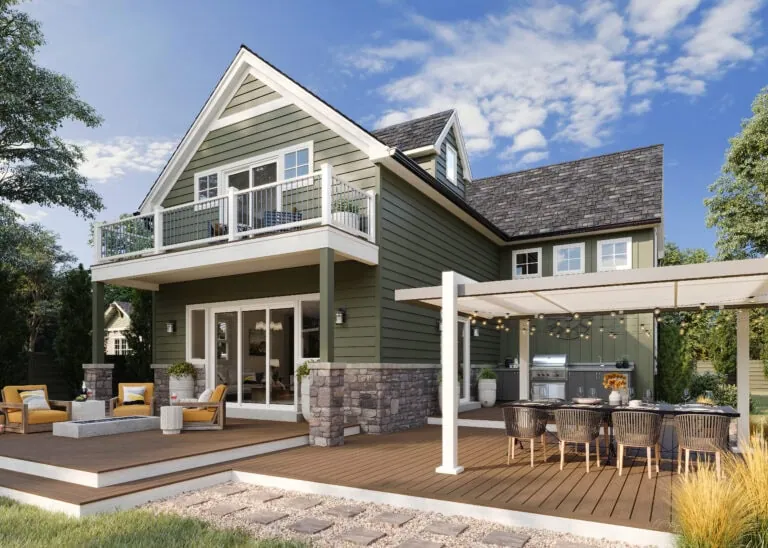
When planning a new deck, most homeowners focus on the fun decisions – size, color, layout and how they’ll use the space. But one of the most important design considerations has nothing to do with aesthetics: it’s climate.
Whether you experience snowy winters, humid summers, intense sunshine or coastal storms, the weather where you live can have a major impact on how your deck looks, performs and holds up over time. Choosing materials and design features that are well suited to your environment can help minimize maintenance, protect your investment and keep your outdoor space looking its best for years to come.
How Weather Affects Your Deck
Your deck is exposed to the elements every day of the year. Moisture, temperature swings, UV rays and severe weather all place different types of stress on decking materials and the structure beneath them.
For example:
- Freezing temperatures can cause moisture trapped in wood to expand and contract, leading to cracks and loose fasteners.
- Heavy rain and humidity create ideal conditions for mold, mildew and wood rot.
- Constant sun exposure can fade finishes and make deck surfaces uncomfortably hot.
- High winds and severe storms can weaken structural connections over time.
Understanding the conditions your deck will face is the first step toward choosing materials and design features built to handle them.
If You Live Where Winters Are Cold
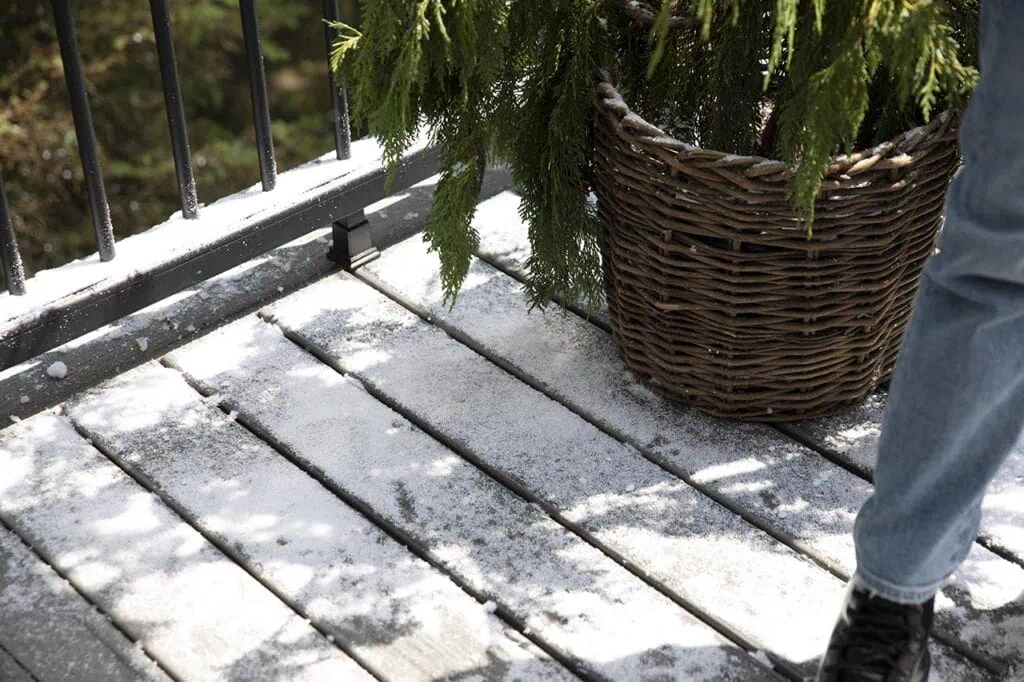
Snow and repeated freeze-thaw cycles can be especially tough on traditional wood decks. Water seeps into cracks and, when temperatures drop, freezes and expands. Over time, this cycle can cause boards to split, fasteners to loosen and framing to deteriorate.
Composite and PVC decking resist moisture far better than wood, helping reduce the expansion and contraction that can lead to damage. They’re also less likely to crack, warp or splinter after years of harsh winters.
If you’re building a raised deck, consider incorporating an under-deck drainage system like Trex® RainEscape®. By capturing and diverting water away from the framing, it helps protect the wood substructure while creating a dry, usable space beneath the deck.
If Your Area Gets Frequent Rain or High Humidity
Constant moisture is one of a deck’s biggest enemies. Wet conditions can lead to wood rot, mold, mildew and corrosion of metal hardware. Water that becomes trapped beneath the deck can also shorten the life of the framing.
Composite decking and PVC are also great options for wet climates because they absorb far less moisture than wood. Just as important is ensuring proper drainage and airflow so water can dry quickly.
Protecting the framing is equally important. Products like Trex® Protect™ flashing tape help keep moisture away from joists and beams, reducing the risk of rot while sealing around screws and fasteners.
Pro Tip: Leave adequate airflow beneath the deck and keep landscaping trimmed back to help surfaces dry more quickly after rain.
If You Live in a Hot, Sunny Climate
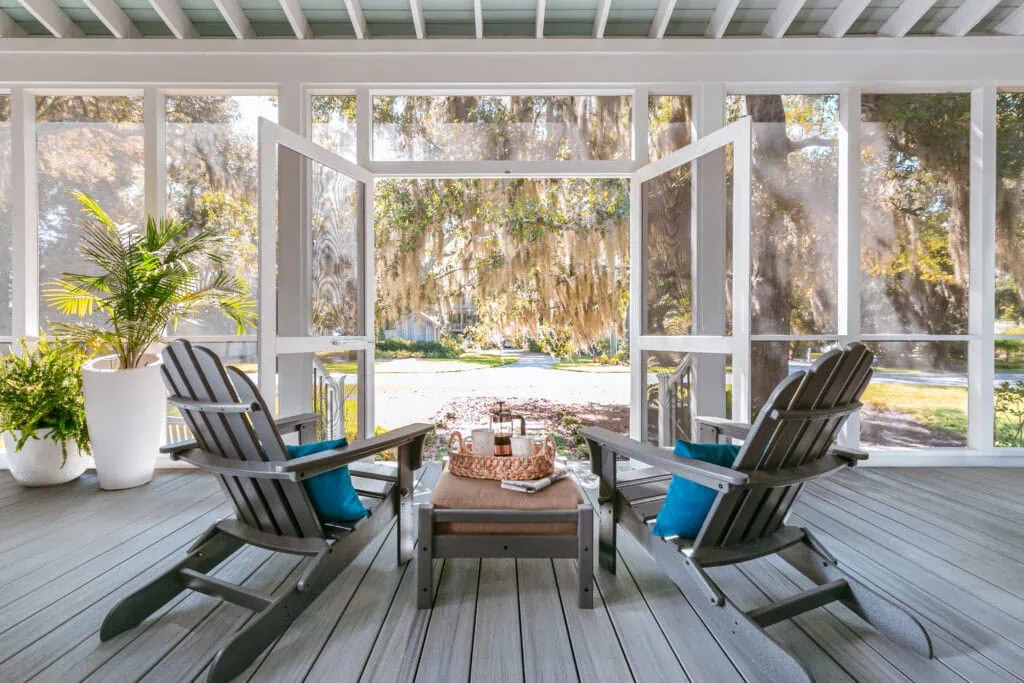
Years of intense sunlight can break down wood finishes, requiring frequent staining and sealing. High temperatures also cause decking materials to expand and contract, while dark surfaces can become uncomfortable underfoot.
Many composite decking options incorporate heat-mitigating technology that helps keep surfaces cooler in direct sunlight. Composite decking also eliminates the need for routine sanding, staining and sealing, making maintenance much simpler in sunny climates.
If you live in a wildfire-prone area, look for decking materials that meet Wildland-Urban Interface (WUI) performance standards designed to help resist ignition and flame spread.
Pro Tip: Choose lighter deck colors to reflect more sunlight, and consider adding a pergola, shade sail or covered seating area to increase comfort during the hottest parts of the day.
If You Live Near the Coast or in Storm-Prone Areas
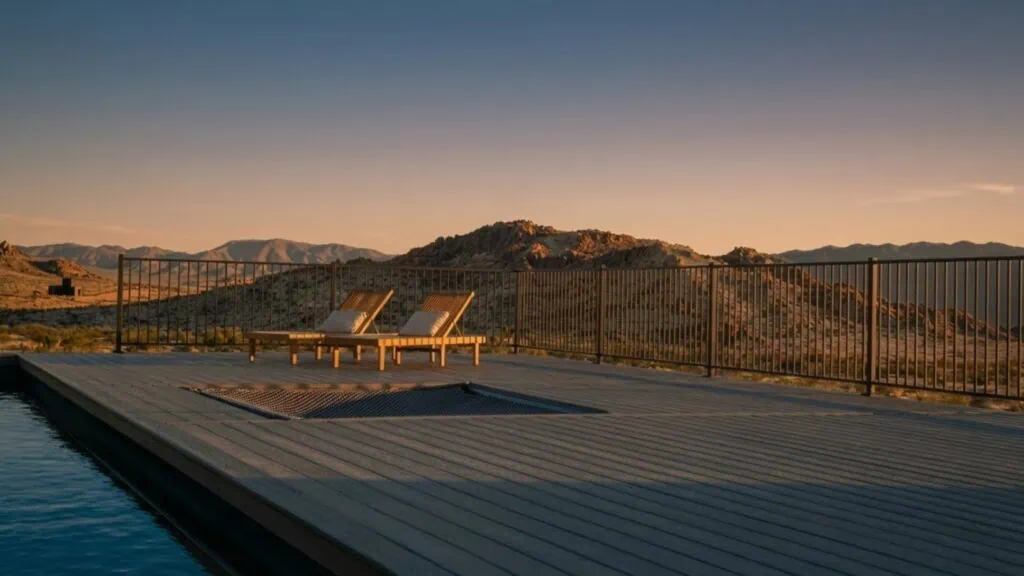
Salt air, heavy rain and strong winds create one of the harshest environments for outdoor structures. Moisture and salt accelerate corrosion, while high winds place additional stress on railings, ledger connections and fasteners.
A long-lasting deck starts with a strong structural system. Proper flashing, secure ledger connections, corrosion-resistant hardware and quality fasteners all help improve long-term performance.
Protecting the ledger board is especially important. Trex® Seal Ledger Tape creates a watertight barrier that helps prevent moisture from reaching one of the deck’s most critical structural connections.
Quick Climate Guide
| If your climate has… | Consider… |
|---|---|
| Snow and freezing temperatures | Composite or PVC decking, under-deck drainage, moisture management |
| Heavy rain and humidity | Composite decking, proper drainage, joist protection and ventilation |
| Intense sun and heat | Heat-mitigating decking, lighter colors, shade structures |
| Coastal weather | Moisture-resistant materials, corrosion-resistant hardware and flashing |
| High winds and storms | Strong framing, secure ledger connections and routine inspections |
Build for the Climate You Live In
No two backyards – or climates – are exactly alike. The best deck isn’t simply the one that looks beautiful on installation day; it’s the one that’s designed to perform year after year in the environment where you live.
By considering your local weather before choosing materials and planning your design, you can create an outdoor living space that requires less maintenance, lasts longer and delivers more enjoyment for years to come. Whether you’re dealing with snow, sunshine, humidity or storms, building with your climate in mind helps ensure your deck is ready for whatever Mother Nature may bring.