


There’s no phone app to inspect decks for safety. Despite the rapid advancement of technology, deck inspections are still done the old-fashioned way – with an in-depth assessment and some hand tools.
Inspections are critical for ensuring the structural integrity and safety of a deck – and should be conducted annually to identify problems and address them before they worsen. When the time comes, a deck inspection guide, like this one, highlights what DIYers need to look for and how to address issues along the way.
Why are Deck Inspections Important?
Decks endure the outdoor elements year-round. They are constantly exposed to rain, snow, ground moisture, heat, cold, destructive insects like carpenter ants and termites, and the sun’s damaging UV rays. Taking intentional, regular care of a deck will extend its life and ensure the deck is safe for use.
Tools Needed for a Deck Inspection
All that is needed for a deck inspection is a flashlight and a flat-blade screwdriver to use as a probe for identifying soft wood. Other optional tools to have on hand include:
- Cellphone: Use its camera to document any observations. For hard-to-reach areas, mount the phone on a selfie stick or angle it at a mirror to capture images.
- Tape measure: Use to check spacing and height of deck parts.
- Moisture meter: This instrument, mostly used during professional deck inspections, detects hidden moisture in wood to indicate its decay potential.
Inspecting Structural Components
Trees were once harvested for lumber after decades of slow, steady growth. Now, to keep up with demand, much of the wood used in outdoor construction is harvested at a younger age, leaving builders with what scientists call “juvenile wood.” This material is structurally immature and inherently unstable, especially when used for outdoor structures.
Whether facing rain, heat, freezing temperatures, ultraviolet sunlight or all of the above, decks endure a constant barrage of weather conditions that put their durability to the test. Even with stains, sealants, sanding and repairs, the fundamental composition of juvenile wood cannot be improved and will inevitably crack and deteriorate with exposure and time. That’s why a substructure inspection of beams, joists, posts and footings on a wood deck is especially important. If problems are severe, the deck should be repaired, or in some cases, replaced.
Beams and Joists
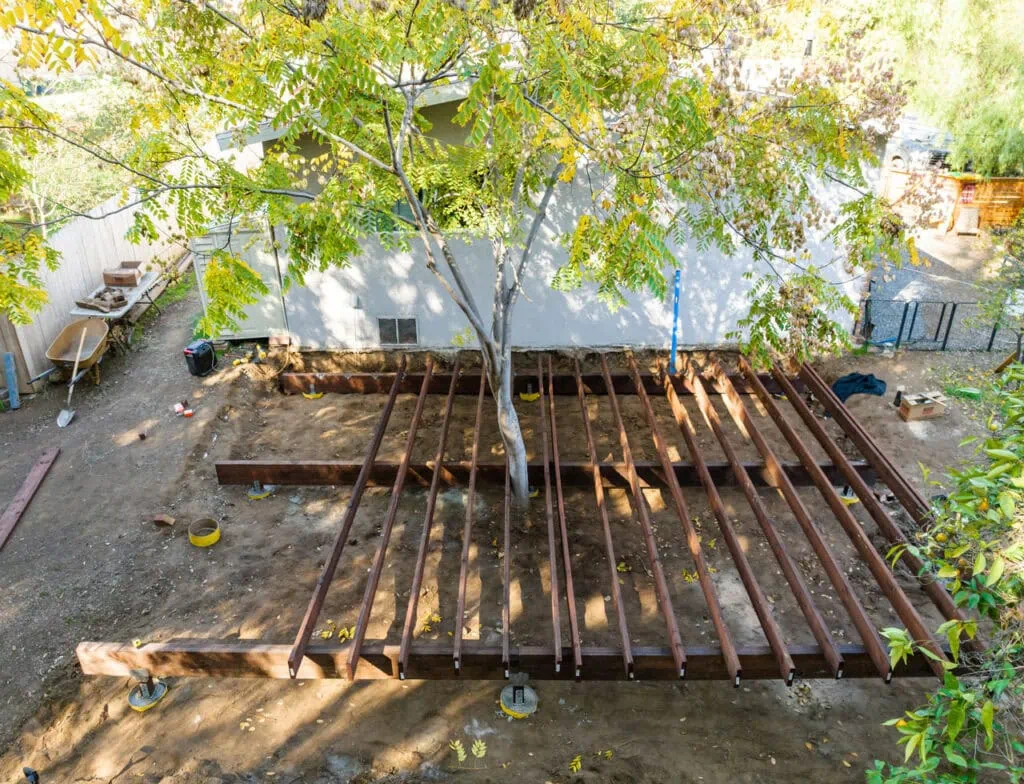
Deck beams are the main horizontal supports that span between posts or piers. They carry the weight of the joists, as well as everything above them, down to the footings. Joists run perpendicular to the beams and support the decking boards. Together, these components form the essential framework that spreads weight evenly and helps keep decks flat, level and strong.
During a deck inspection, these components should be assessed for moisture penetration and other signs of wear and tear since a deck will not last without a strong structure. Watch for:
- Moisture: Look for soft, spongy or crumbling wood as well as dark spots, streaks or mold, especially near the connections. The closer the beams or joists are to the ground, the more likely they will show signs of moisture, damage or rot.
- Pro Tip: Apply flashing tape like Trex Protect® over joists and beams. This butyl-based tape prevents water from penetrating wood framing and seals fastener holes, helping to prevent rot and extend the life of the deck’s substructure.
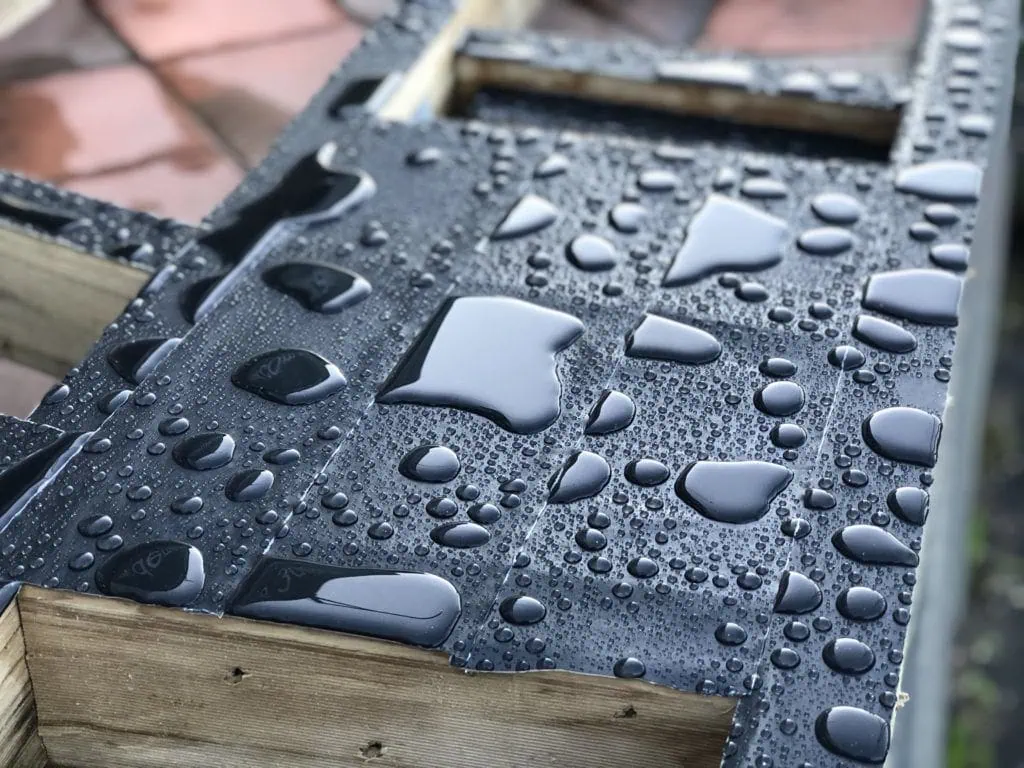
- Cracks and splits: Look for cracks or splits in the wood that are 1/8” or larger. A crack could be a sign of an overloaded deck, and reinforcement might be needed.
- Sagging and warping: Decks can sag or bow if joists are weakened, undersized or overloaded. Signs of any kind of unevenness on a deck can indicate joist damage. Consider getting a professional evaluation for a sagging or warping deck. If needed, “sister joists” (new, additional joists alongside the existing ones) can be installed to improve a deck’s structural integrity. While it sounds simple, the job can be complicated and is best done by a professional.
- Connections: Assess the number, size and condition of the nails, screws, bolts and hardware that connect the components of the substructure. Rusted, corroded or loose hardware should be tightened, replaced or upgraded.
- Ledger board: Make sure the ledger is securely fastened with lag bolts or structural screws (not nails). This critical connection point to the house may be hidden by siding, decking and/or flashing, so below-deck access may be required.
- Pro Tip: The ledger board, when not properly protected, is where most decks tend to fail. To avoid this, use flashing tape like Trex® Seal™ to waterproof the ledger board and prevent moisture, swelling, cracking and decay.
Posts and Footings
Posts transfer the load from the beams to concrete footing. Inspect them for:
- Rot and decay: As with the joists and beams, look for soft, spongy or crumbling wood as well as discoloration or mold/fungi growth. Wood posts should never contact soil or concrete directly because they can wick ground moisture.
- Stability: Push or pull the posts to see if they move; they should not. Verify the posts are vertically aligned, plumb and anchored securely to their footings.
- Connections: There should be no gaps between the beams and the posts, and all fasteners and hardware should be secure and free of corrosion.
- Insects: Look for small holes and fine dust residue from insects such as termites or carpenter ants. Damp wood, such as posts in contact with the soil, is especially attractive to carpenter ants.
Inspecting the Decking Surface
This is the area that is most visible, so it’s easier for homeowners to spot problems. Wood decking tends to show more wear than other materials and, therefore, requires more maintenance. However, there are other materials purposefully engineered to be more durable and resilient.
Composite decking, unlike wood, won’t rot, crack or splinter and resists fading, scratching and mold. With composite options like those from Trex®, maintenance and inspections are less grueling, leaving more time for enjoyment while providing a long-term solution to deck damage.
No matter what material a deck is built with, the deck surface should always be checked for:
- Cracks, splits and splinters: These commonly form in pressure-treated wood as it ages. Replace any deck board that shows large cracks, splits or splinters.
- Warping or cupping: If deck boards are lifting, bowing, cupping or warping, they might be suffering from exposure to excessive moisture or improper installation. Remove and replace any defective boards.
- Rot and decay: Soft spots and areas stained black or green might indicate moisture, mold or rot. Check the area where the deck connects to the house and around planters and furniture, which tend to hold moisture against the deck boards.
- Fasteners: Replace any loose, protruding or corroded fasteners. Make sure no deck boards are loose or wobbly.
- Spacing between boards: Proper gaps between deck boards ensure water drains off, debris passes through and airflow carries away moisture. For optimal performance and longevity, gaps should range from 1/4” to 3/8”.
- Staining: Planters, grills, furniture and leaf buildup can all leave stains on a deck. The same is true for dirt, debris, mold and algae buildup. If a mild detergent and scrub brush doesn’t remove the markings, power washing and/or specialized cleansers may be needed.
Railings
Railings can provide protection against falls and separation between decks and the rest of the yard. Particularly for elevated decks, railings are necessary for safety. They should be thoroughly checked and taken care of for longevity and durability. When inspecting, take note of:
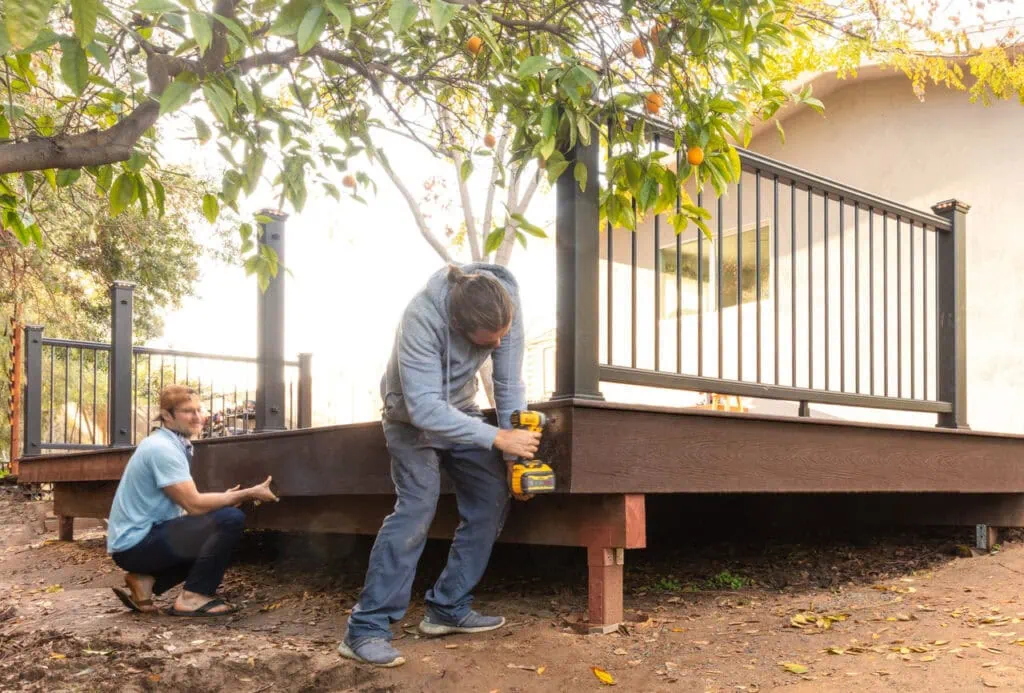
- Loose or wobbly railings: Push on the railings and railing posts to check for movement. For railings to be safe, they must be firmly anchored to the posts, and the posts must be anchored to the deck structure. Refasten or replace any loose rails or posts.
- Height and spacing: The International Residential Code (IRC) offers guidelines for height and spacing of railings, but many cities, counties and states have adopted their own codes to address specific safety concerns and should be followed accordingly. As a general guideline, the IRC requires residential decks higher than 30” to have 36” of minimum railing. Local codes also regulate the spacing of balusters, sometimes called spindles, which are the vertical posts that make up the railing. The IRC mandates that no gap between these should exceed 4”.
- Handrails: Ensure handrails are graspable and meet the code for mounting height.
Stairs
Stairs deserve special attention because they’re associated with a higher risk of falls. Look for:
- Height, depth and spacing: Stairs should have a uniform depth and riser height and meet the local building code size requirements. By IRC standards, guardrails should be at least 34” high when measured vertically from a line connecting the stair nosings, which are the protruding edges of a stair tread that cover the junction between the horizontal step and vertical riser. Doing so ensures consistent protection along the slope of the stairs.
- Rotting: Check for rot or other defects and be sure the treads are securely attached and level. Treads should be about 10” deep and have a rise of about 7.5”.
- Stair support: Inspect stair stringers, the diagonal structural support running along the side or center of a staircase, for cracks, rot or signs of overloading. Make sure they’re securely attached to the deck and footings.
- Visibility: Lights, like discreet riser lights, can be integrated for added safety while providing a polished, finished look.
Deck Maintenance Tips
Maintenance can be a chore, but it beats having to make unexpected – and potentially costly – repairs. In addition to conducting a full annual inspection, take the following steps to keep decks in good condition year-round:
- Sweep away debris as needed.
- Wash the deck at least twice a year.
- Watch for protruding fasteners, loose deck boards or fascia and resecure them.
- Occasionally shift around furniture, planters and other deck accessories to keep surrounding water and dirt from staining the deck boards.
- Trim bushes and trees that block sunlight or hamper airflow around the deck.
- Ensure rainfall and other surface water drains away from the deck and doesn’t pool around the posts. If pooling is problem, slope the site so water flows away.
When to Call a Professional
Hiring a professional deck inspector is always a wise choice but specifically when the structural integrity of a deck is in question. Go with a pro when:
- Your deck is older than 15 years or gets heavy use.
- The deck has experienced severe weather (e.g., a major storm, hail, hurricane, earthquake or heavy snowfall).
- You’re planning to buy or sell a house.
- You’re planning to make major modifications, such as adding a hot tub or outdoor kitchen.
- There are structural problems or building code compliance concerns.
Builder search tools make it possible to choose a professional with experience, the proper certifications and good reviews to ensure the project is in great hands.