
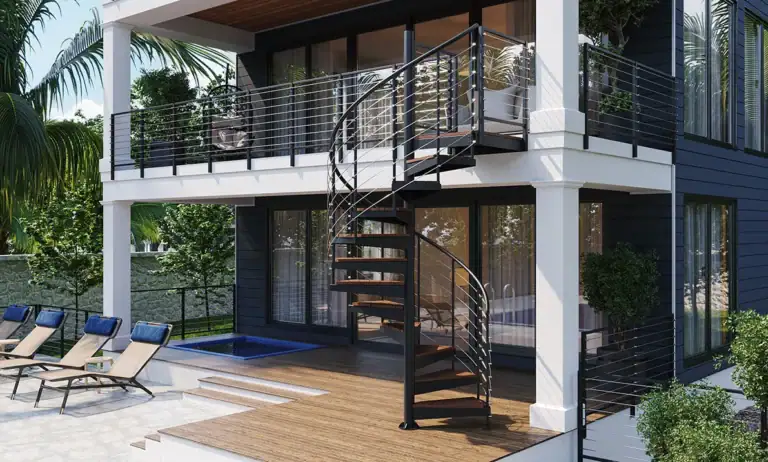
Adding a spiral staircase to your home is an excellent way to maximize square footage, open up your floor plan, and create a distinct architectural focal point. Whether you are connecting an indoor living room to a loft or linking a backyard deck to a second-story balcony, one of the most critical decisions you will make is selecting the right material.
Steel and aluminum are the two most reliable metal options for spiral stairs. Each brings unique advantages to a residential project. To help you make an informed decision for your space, this guide breaks down how both materials perform across key categories like durability, climate suitability, maintenance, aesthetics, and cost.
1. Environmental Location and Climate
The first question to ask when planning your layout is whether the staircase will live inside your home or face the elements outside.
Indoor Applications
For indoor installations, the choice between an aluminum or metal spiral staircase depends largely on your personal style and design goals. Because indoor environments are climate-controlled, rust and weather-related wear are minor factors. Standard steel, powder-coated steel, and aluminum will all perform beautifully over decades of indoor use.
Outdoor Applications
For outdoor decks, patios, and docks, environmental conditions should drive your material choice.
- Aluminum: This material is naturally rust-resistant. When exposed to oxygen, aluminum forms a protective microscopic oxide layer that prevents the metal from degrading. This makes aluminum highly reliable for humid regions, coastal environments with salty air, and areas with high rainfall or snow.
- Galvanized Steel: Standard steel will rust if left raw outdoors. To protect outdoor steel stairs, the metal undergoes a hot-dip galvanizing process. This coats every surface and connection point in molten zinc, creating heavy-armored protection against moisture, freezing cycles, and physical wear.
2. Structural Strength and Longevity
Both materials provide exceptional structural integrity, but they handle demanding conditions differently.
Steel
Steel is inherently dense, tough, and rigid. It offers incredible structural strength, which translates to a solid foundation underfoot. If your project involves high-traffic areas, rental properties, or situations where you will frequently carry heavy items like coolers and large planters up and down, steel provides the rugged performance needed for heavy-duty use.
Aluminum
Despite being a lighter-weight metal, engineered aluminum spiral stair systems are remarkably strong, secure, and resilient. Aluminum is an excellent choice for standard residential use where long-term durability is required. It delivers a solid, dependable structure that will reliably support standard household traffic for decades.
3. Maintenance and Finish Options
Your willingness to perform routine upkeep should play a major role in your material choice.
The Powder Coating Advantage
Powder coating is a multi-step finishing process where a dry powder is electrostatically applied to the metal and cured under heat. This creates a skin that is far tougher than traditional liquid paint. Manufacturers that use an in-house powder coating process can ensure both aluminum and steel stairs receive a smooth, durable finish.
Powder-Coated Aluminum Upkeep
A powder-coated aluminum stair requires almost zero maintenance beyond an occasional rinse with soap and water to remove dirt or pollen. Because the metal underneath does not rust, you do not have to worry about the finish peeling or bubbling over time.
Galvanized and Powder-Coated Steel Upkeep
Hot-dip galvanized steel features a rugged, zinc-coated surface that requires periodic inspection for wear but remains highly weather-resistant. If you choose powder-coated steel instead, you should check the staircase occasionally for deep scratches. If a scratch penetrates down to the raw steel, it must be touched up to prevent localized rust from forming.
4. Design Styles and Customization
A spiral staircase should complement the architectural style of your home. The material you select influences the final visual identity of the project.
Modern and Contemporary
Aluminum stairs lend themselves beautifully to crisp lines and minimalist layouts. Because aluminum can be easily extruded and shaped, it pairs perfectly with modern design accents like stainless steel line rail balusters or minimalist vertical bars. It can be finished in standard black, white, gray, or custom colors to match your existing deck railings or interior trim.
Classic, Industrial, or Traditional
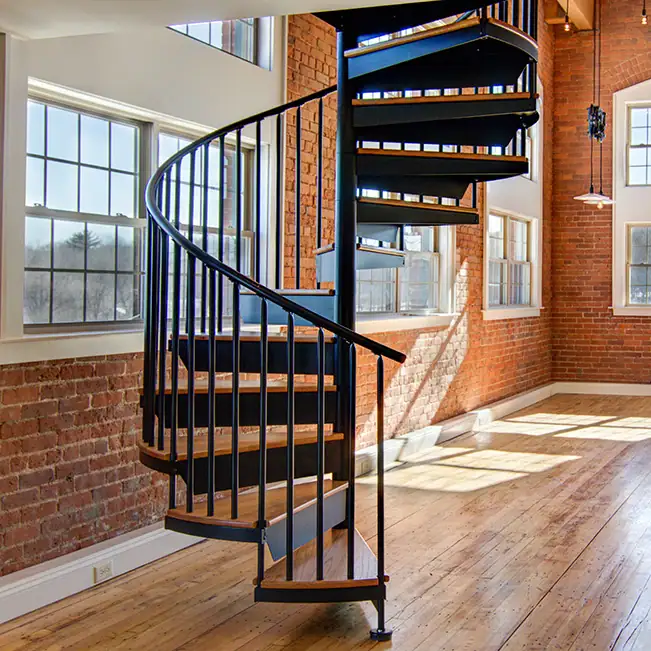
Steel offers tremendous versatility in styling. It can be left with a rugged, hot-dip galvanized finish for a functional, industrial look that fits workshops or rustic exterior spaces. Alternatively, steel frames can be paired with rich wood tread covers like red oak or composite materials to blend seamlessly with traditional home interiors and classic wooden decks.
5. Transport and Installation
If you plan to install the staircase yourself as a weekend DIY project, or if your installation site has difficult access, the physical weight of the components matters during assembly.
- Installing Aluminum: Because aluminum components are lighter, they are much easier to lift, position, and fasten during assembly. This can significantly reduce installation time and labor costs if you are hiring a local contractor, as the parts are manageable for a smaller crew.
- Installing Steel: Steel components are heavy. Assembling a steel spiral stair typically requires at least two or three people to safely manage the weight of the center column and the individual steel treads during the construction process.
Conclusion: Making Your Decision
To choose the material that best fits your project, look closely at your location, your budget, and how you plan to use the space.
Aluminum is likely your best fit if:
- The staircase will be installed outdoors in a coastal, wet, or humid climate.
- You prioritize a low-maintenance lifestyle and want an option that will never rust.
- You want parts that are easier to handle during a DIY installation.
- Your home has a modern or contemporary design aesthetic.
Steel is likely your best fit if:
- You prefer maximum rigidity for a high-traffic or demanding area.
- The stair is going indoors, or you are choosing hot-dip galvanized steel for a rugged outdoor area.
- You are working within a tighter budget but still require a high-strength metal system.
- You want to incorporate wood tread covers or custom industrial details into your design.
Both materials offer long-lasting performance when matched with the right environment and finishing options. By balancing your local weather conditions, usage needs, and style preferences, you can confidently select the staircase foundation that will serve your home safely for decades.