

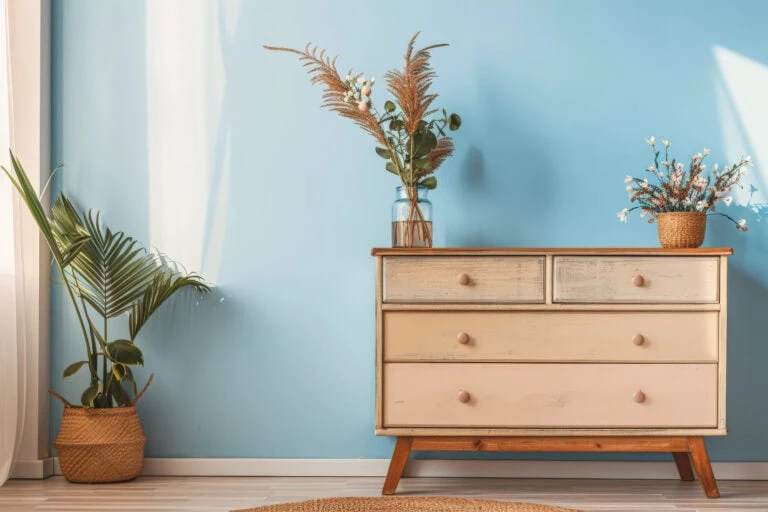
A chest of drawers usually gets picked last, after the bed and the nightstands are already sorted, which is exactly how so many bedrooms end up with a piece that’s too tall for the ceiling slope, too wide for the wall, or too shallow to hold much more than a few folded shirts. It’s an easy piece to underestimate, right up until moving day when it either doesn’t fit through the door or doesn’t fit the room once it’s inside.
This guide walks through what matters when choosing a chest of drawers, from measuring the space correctly to matching storage needs and keeping the finished room safe and easy to move around in. None of it requires guesswork once you know what to check first.
Measuring Your Space Before You Shop
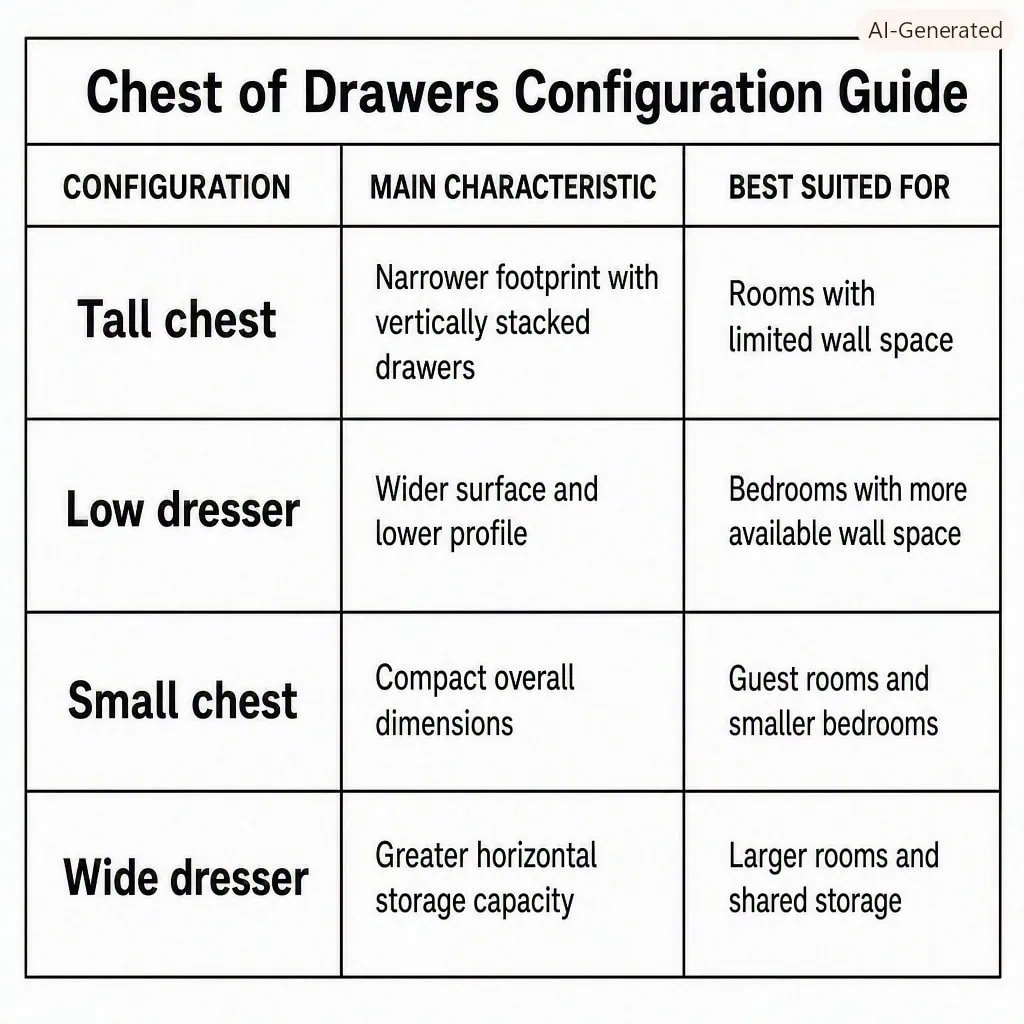
Start with the wall the chest will sit against, not the piece itself, since a beautiful chest that’s two inches too wide for the available wall space is a beautiful chest that goes back in the truck. Chest dimensions vary considerably by design. Tall models are typically narrower and use more vertical space, while low dressers are wider and require a longer section of open wall.
Measure the available width, height, and depth, including baseboards, outlets, windows, and ceiling slopes. Check the product’s exact depth and how far the drawers extend when fully open. Leave enough additional space to stand comfortably and move between the open drawers and the bed or other furniture.
It helps to measure the doorway and hallway leading to the room too, the same way you would for a mattress, since a chest that fits the room can still get stuck on the way in if a turn is tighter than expected.
Matching Scale and Style to the Room
A good rule of thumb is to keep the chest’s height roughly in proportion to the bed, so a tall chest doesn’t tower awkwardly next to a low platform bed, and a short piece doesn’t disappear next to a tall upholstered headboard. Scale matters more than matching finishes exactly, since two pieces in complementary tones generally read better together than two mismatched heights in the same wood.
Style is a smaller decision than most shoppers expect once scale and proportion are settled. A clean-lined chest works in most bedroom styles, while a piece with more ornate hardware or detailing tends to stand out as a visual statement, which is worth considering if the room doesn’t already have another strong point of interest.
Considering Drawer Configuration and Storage Needs
Drawer count and depth matter more for daily use than overall style, so it helps to think through what’s going inside before choosing a layout. A shallow top drawer suits folded underwear and accessories, while deeper lower drawers handle sweaters and bulkier items better than several identical shallow ones would.
The right drawer count depends on what you plan to store and the usable dimensions of each drawer. A chest with fewer deep drawers may hold more bulky clothing than a model with several shallow drawers. If closet space is already limited, prioritize the overall usable storage capacity rather than drawer count alone.
[IMAGE: A wooden chest of drawers positioned against a bedroom wall with a lamp and a small tray on top. Alt text: “Chest of drawers in a bedroom with a table lamp on top.”]
Choosing Materials and Construction Quality
Material alone does not determine how long a chest will last. Solid wood, engineered wood, MDF, particleboard, and veneered panels can all perform differently depending on their thickness, construction, hardware, and exposure to moisture.
Check whether the cabinet feels stable, the drawer boxes are securely joined, and the back panel and base are firmly attached. Dovetail joints can indicate careful drawer construction, but they are only one of several quality factors to consider.
Drawer slides matter just as much as the drawer box itself. Check the manufacturer’s stated load capacity, particularly if you plan to store heavy or bulky items. Test whether the drawers open smoothly, stay aligned, and feel stable when fully extended.
Anchoring the Chest for Safety
Once the chest is in the room, anchoring it to the wall is important, particularly in a home with young children. Health Canada’s guidance on furniture, appliance, and television tip-overs recommends securing furniture to a wall stud or with suitable heavy-duty anchors, keeping heavier items in the lower drawers, and opening only one drawer at a time.
Use the anti-tip hardware supplied or recommended by the manufacturer. The appropriate fastener depends on the wall material, so follow the product instructions and use hardware suitable for the specific wall construction. A chest should be anchored even when it feels stable on its own.
Positioning the Chest in the Room
Once the chest is chosen and anchored, its placement affects the rest of the room more than most people expect. A tall chest can act as a secondary focal point in a room where the bed already dominates the space, so its visual weight is worth balancing against whatever else stands out, whether that’s a large window or a piece of art on the opposite wall.
Keep the main route through the room clear when the drawers are closed. In front of the chest, leave enough space for the deepest drawer to open fully while still providing practical standing room for the person using it.
A lamp on top with a warm colour temperature near 2700K can add a layer of accent lighting without requiring an extra floor lamp. If the floor is uneven, use the furniture’s adjustable feet or another manufacturer-approved levelling method. Confirm that the chest is stable before anchoring it to the wall.
Table: Chest of Drawers Configuration Guide
Pulling It Together
Choosing the right chest of drawers comes down to measuring the space with care, matching its scale to the rest of the room, and picking a drawer configuration that fits what needs to be stored. Anchoring it to the wall and providing enough space for the drawers to open fully rounds out a decision that holds up well past the first few weeks of use.
Frequently Asked Questions
What size chest of drawers fits a standard bedroom?
There is no single standard size that works for every bedroom. Measure the available wall width, height, and depth, then compare those dimensions with the exact measurements of the chest. Remember to account for how far the drawers extend when fully open.
How many drawers should a chest of drawers have?
The right number depends on what you need to store and the dimensions of the individual drawers. A model with fewer deep drawers may provide more useful storage for bulky clothing than one with several shallow drawers.
Does a chest of drawers need to be anchored to the wall?
Anchoring is recommended for any chest of drawers, particularly in homes with young children, since opening drawers can shift the furniture’s centre of gravity and increase the risk of a tip-over. Use the hardware supplied or recommended by the manufacturer and select fasteners suitable for the wall material.
What’s the difference between a chest of drawers and a dresser?
A chest of drawers is typically taller and narrower, with drawers stacked vertically, while a dresser is usually wider and lower, sometimes paired with a mirror. Either can work in a bedroom, and the better choice usually comes down to the room’s proportions and available wall space.
How much space should be left in front of a chest of drawers?
The required space depends on the depth of the chest and how far its drawers extend. Measure the furniture with the deepest drawer fully open and add enough standing and walking room for comfortable use.