
Q. I’d like to build a backyard concrete patio to replace a rotting deck. The patio would be about 18 by 10 feet. How do I figure out how much concrete to order?
A. Concrete is sold by the cubic yard, and the volume is simply length × width × thickness. One cubic yard equals 27 cubic feet (a 3×3×3‑foot cube). Most patios are poured at either 4 inches (0.33 ft) or 6 inches (0.5 ft).
For an 18×10 patio at 6 inches thick:
18 × 10 × 0.5 = 90 cubic feet.
90 ÷ 27 = 3.33 cubic yards.
You’d round up and order 4 cubic yards. A 4‑inch slab would come out closer to 2.5–3 yards.
Beyond the math, a few construction details matter just as much as the quantity:
• Base prep: Excavate for the slab plus 4–6 inches of compacted gravel or crushed rock. A solid, well‑drained base prevents settling and cracking.
• Formwork: Stake forms every couple of feet and check diagonals so the patio stays square. A light coat of form-release helps the boards come off cleanly.
• Reinforcement: Use rebar or welded wire mesh, supported on chairs or small blocks so it stays in the middle of the slab.
• Slope: Pitch the slab away from the house (typically 1/8 to 1/4 inch per foot) to shed water.
• Expansion and control joints: Use an expansion joint where the patio meets the foundation, and cut control joints every 8–10 feet (about 1/4 the slab depth) to manage shrinkage cracks.
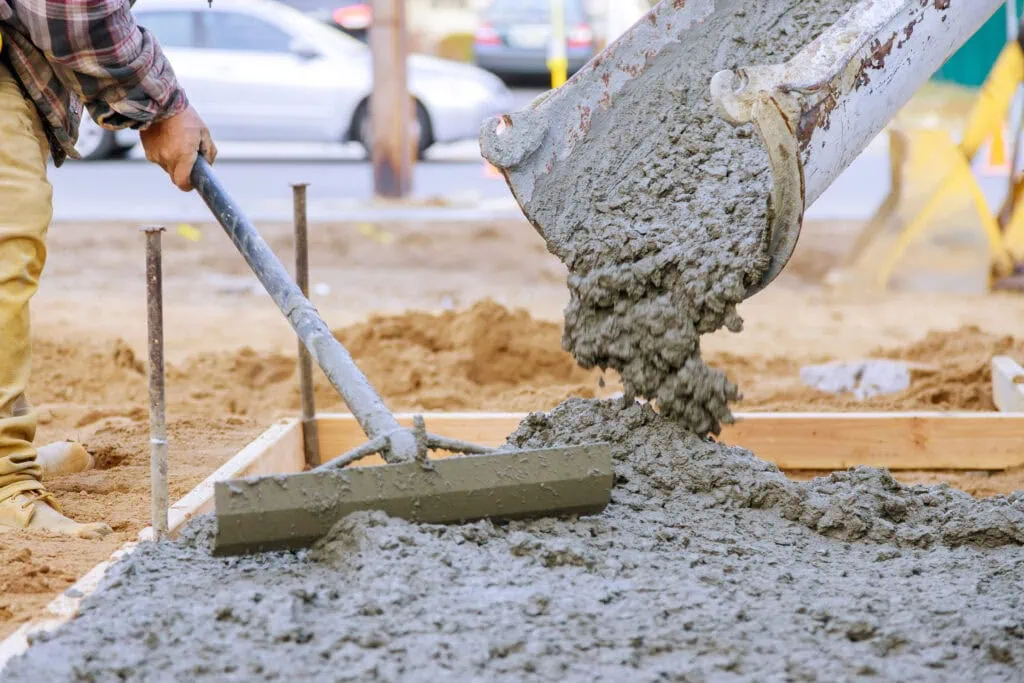
• Weather and timing: Avoid extreme heat, cold, or rain. Have enough help on pour day so you can screed, bull float, edge, and broom-finish before the concrete sets.
• Curing: Keep the slab damp or use a curing compound for several days. Proper curing dramatically improves strength and durability.
These steps ensure the patio performs well long-term and help DIYers avoid the most common pitfalls.