
Customized signage is a navigation system designed for real building layouts, user flow, and operational logic rather than generic templates. In buildings where people move constantly, clarity is not optional. Offices, hotels, medical facilities, and public institutions all depend on clear identification to function smoothly. When rooms, departments, or zones are labeled inconsistently, even the best architecture becomes difficult to use. Customized signs solve this problem by adapting identification to the actual structure of a building, instead of forcing spaces into a one-size-fits-all solution.
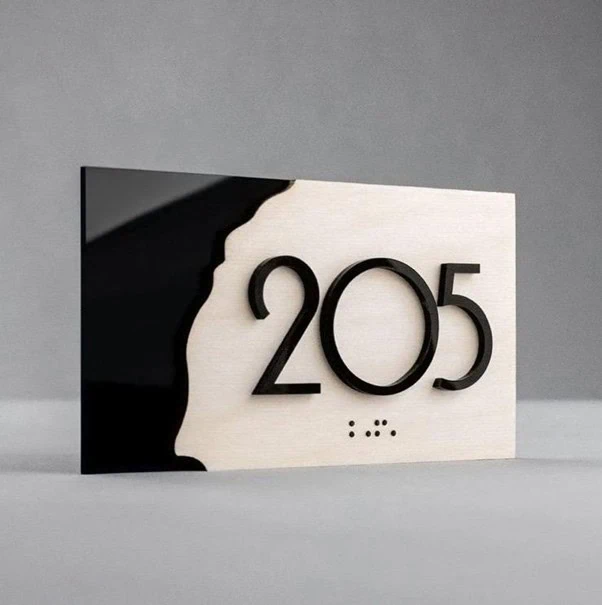
Standard signage often fails because it ignores context. Door sizes differ, corridors vary in width, and user behavior changes from one building to another. Customization allows signage to respond directly to these variables, making navigation predictable and reducing unnecessary questions or delays.
Reliable customized signs, developed and structured through Bsign Store, are built to match how a space is actually used, not how it looks on a floor plan.
Why customization improves function
The main advantage of customized signage is precision. Each sign is created for a specific location, purpose, and movement pattern. This approach eliminates ambiguity and ensures that information appears exactly where it is needed.
Key functional benefits of customized signage include:
- adapting size and proportions to doors, walls, or desks;
- standardizing placement rules across the entire building;
- differentiating clearly between similar rooms, departments, or zones.
When signs follow a unified logic, people learn the system quickly and rely on it without conscious effort.
Where customized signs are most effective
Customization is especially valuable in buildings with complex layouts or mixed functions. In such environments, generic signage often creates confusion instead of clarity.
Customized signs perform best in:
- office buildings, where departments, meeting rooms, and shared areas require precise identification;
- hotels, where room numbering and service zones must be intuitive for first-time guests;
- medical and educational facilities, where clarity supports safety and efficient workflows;
- administrative buildings, where visitors expect clear orientation without assistance.
In these spaces, signage becomes part of the operational infrastructure rather than a visual afterthought.
Materials selected for performance
Functional signage depends on materials that remain stable under daily use. For this reason, production focuses exclusively on:
- Wood, which provides a durable surface suited to environments that require a calm, approachable tone.
- Stainless steel, which resists wear and frequent cleaning in high-traffic areas.
- Acrylic glass, which allows precise cutting and sharp readability in modern interiors.
All customized signs are designed as wall-mounted or desk-mounted elements, ensuring clarity without interfering with movement or safety requirements.
Technology behind reliable signs
Customization is not only about appearance; it is also about production accuracy. CNC laser cutting ensures consistent dimensions across large signage systems, while permanent UV printing keeps text and symbols readable over time.
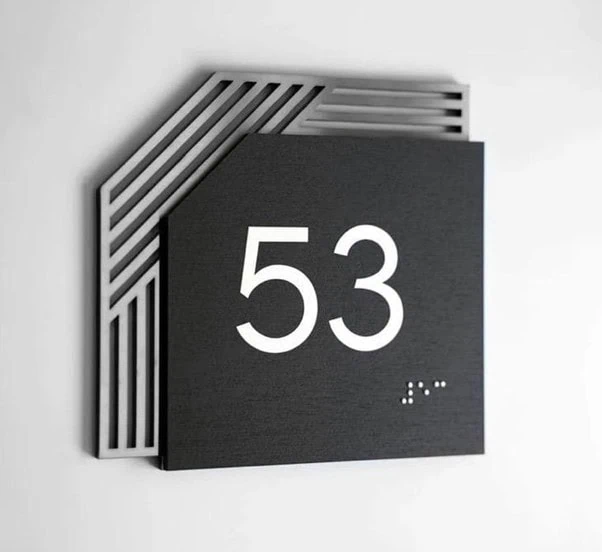
Because signs are handcrafted and finished individually, quality remains consistent even in large-scale projects. This reliability is essential in environments where signage must perform accurately for years without frequent replacement.
For improved accessibility, Braille can be added upon request, allowing customized signs to meet inclusive navigation requirements without altering their primary function. Solutions developed within Bsign Store follow this approach by combining technical precision with long-term usability.
Functional expectations in 2026
By 2026, users expect buildings to be self-explanatory. Clear navigation is no longer considered an added benefit but a basic operational standard. Customized signage supports this expectation by aligning information with real user behavior rather than theoretical layouts.
When identification is precise, durable, and logically placed, it reduces friction across daily operations. Staff spend less time giving directions, visitors move confidently, and buildings function as intended.
Well-designed signage systems are increasingly viewed as part of building infrastructure, not interior decoration.