

By: Hal Jones
Occasionally we get to do some really neat things, last week in Charlotte, Kobalt Tools set up a motor build for a few lucky journalists. Putting together a NASCAR motor with Chad Knaus, Ron Malec and Danny Emerick overseeing your work is at once exhilirating and intimidating. Everyone knows Chad, a lot of people recognize Ron, (Ron is the one without the hat in the 5% Jimmie Johnson commercial for Lowe’s running now) and Danny has been the engine tuner for the 48 Car. The good folks at Hendricks had three motors set up for us to put together. If Hendricks was looking for fresh meat for its shop, we were not going to be on the menu. Our times were fast for weekend warriors, but Hendricks operates in rare air with its total dedication to development, implementation and efficiency, and none of us would even come close to making the grade.
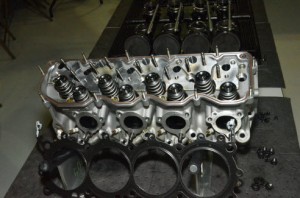
Testing out Kobalt’s new and improved line of tools was our purpose in being at Hendricks, and building a race motor was definitely the coolest way to sample the smooth operation of Kobalt’s new and vastly improved ratchets, and sockets that are finished with great attention to detail. Sloppy sockets are a bane to mechanical projects and lead to busted knuckles and elbows. Having a socket lose its grip while you are torqueing a bolt is a most unpleasant experience and seeing my dad have this happen to him was my first introduction to some flowery language that is saved for special occasions. Kobalt addressed the socket fit the same way that the highest quality tool manufacturers do. Machine to tight tolerance and chamfer the sharp leading edge to allow the socket to glide itself into place when placed on the hex head.
The new Kobalt ratchet operates smoothly and efficiently with its additional teeth. The additional teeth not only add to the smooth feeling you get when you operate the ratchet, but how many times have you been in tight quarters and not had enough room to make the ratchet operation engage due to a greater angle of swing needed before the ratchet engages the next tooth? More teeth means your ratchet can operate in tight quarters better . Below is a cut-away view of the ratchet. 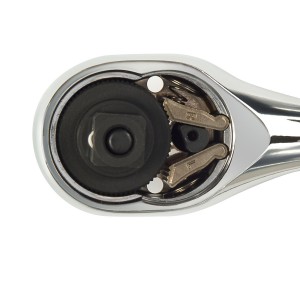 On any engine build you will be using a torque wrench for all of your critical fasteners. The Kobalt Torque Wrench drew nice reviews from all us. On the valve covers we used speed wrenches. The new line of Kobalt tools performed as touted. If you remember the single “v” line of Craftsman tools, this is what I thought of when we were using the improved Kobalt tools. I remember getting my first set of nice sockets when I turned 14. Unfortunately when it came to replace lost sockets from that set, the newer sockets and ratchets weren’t up to snuff. I felt like the tools I was using had gone from being guaranteed for my life to being guarenteed for the life of the tool, which had become too short for someone using their tools constantly. Kobalt assured us it was standing behind not only its new line, but its older sockets as well. In fact the program is caled, Sockets for Life. In a matter of minutes we had our race motor assembled, our tools were cleaned and placed back in their respective places for storage.
The coolest part of this project came next, firing the 850 HP beast up for a test run. Check out the video below for some unrighteous noise.