

Fresh flowers transform a room in under five minutes – faster than any paint job or furniture swap. A well-known Rutgers University study found that people who kept cut flowers at home reported feeling less anxious and more satisfied with life over the course of the study. You don’t need a design degree or a big budget to pull off arrangements that look intentional. A single grocery-store bunch, a few jars from your recycling bin, and a handful of practical tricks will do the job.
Why bother? The real impact of flowers on a space
Most competitors in the floral space focus on selling blooms, not teaching you how to style them once they arrive. That gap matters. A $15 bunch of ranunculus can look like a $90 centerpiece – or like an afterthought – depending entirely on placement and vessel choice.
U.S. consumers spend billions of dollars on cut flowers every year. Yet very few of those buyers received any styling guidance with their purchase. This article fills that gap.
Pick the right vessel before you pick the flower
Forget the standard glass vase for a moment. Walk through your kitchen. A ceramic pitcher, a vintage tin, a wide-mouth mason jar – each one changes the personality of an arrangement.
Quick vessel-to-flower pairing guide
- Narrow-neck bottles suit single stems like dahlias, protea, or garden roses
- Wide-mouth pitchers hold lush, sprawling bunches of peonies or hydrangeas
- Low ceramic bowls work with short-cut blooms floating on two inches of water
- Copper mugs add warmth alongside autumn-toned chrysanthemums or marigolds
- Recycled jam jars clustered in groups of three to five create a scattered, organic look on a dining table
I once arranged a white rose bouquet in a matte black ceramic pot, and guests assumed a florist had styled the room. The contrast between the bright petals and the dark vessel did all the heavy lifting. Total cost: about $12 for the roses plus a pot I already owned.
Room-by-room styling: where flowers make the biggest difference
The entryway – first impressions in 30 seconds
A single statement stem on a console table signals intention. Tall branches like cherry blossoms – available February through April in most U.S. grocery stores – add height without clutter. Keep the water level at about one-third of the vase; overfilling causes spills when doors swing open.
The kitchen – shorter stems, stronger scents
Herbs double as decor. Place a small bunch of fresh lavender or rosemary cuttings in a four-inch jar near the stove. The stems last roughly five to seven days in water, and they carry fragrance into the room without synthetic air fresheners. Trader Joe’s sells small herb bundles for $2.99, and those bundles look surprisingly elegant once trimmed to a uniform height.
The bathroom – humidity-loving blooms
Orchids thrive in bathrooms because humidity levels typically hover between 50% and 70%. A single phalaenopsis orchid from Lowe’s or Home Depot costs $12–$18 and blooms for eight to twelve weeks. Place one on the edge of the tub or next to the sink. No arrangement needed – the stem does the work alone.
The bedroom – soft colors, low arrangements
Nightstand flowers should sit below eye level when you’re lying down. Trim stems to about six inches. Soft pinks, creams, and whites create a calm atmosphere. Garden roses – especially varieties like Patience or White O’Hara – bring a gentle scent without overwhelming a sleeping space.
A 5-step DIY arrangement method (no floral foam required)
Floral foam contains microplastics and does not biodegrade, which is why more florists and gardens are moving away from it. You can skip foam entirely with this tape-grid technique:
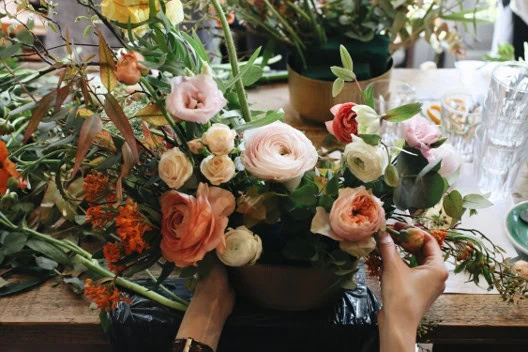
- Clean your vessel and fill two-thirds with room-temperature water.
- Lay strips of clear floral tape across the opening in a grid pattern – roughly one-inch squares work best.
- Insert greenery stems first to build a base structure.
- Add focal flowers (roses, peonies, dahlias) at varying heights through the grid squares.
- Tuck filler blooms – baby’s breath, wax flower, astilbe – into gaps between focal stems.
The whole process takes about ten minutes. One roll of clear floral tape from Amazon costs under $5 and lasts for dozens of arrangements.
Extending bloom life beyond the usual three days
Most people toss flowers after three to four days. Proper care stretches that window to ten to fourteen days.
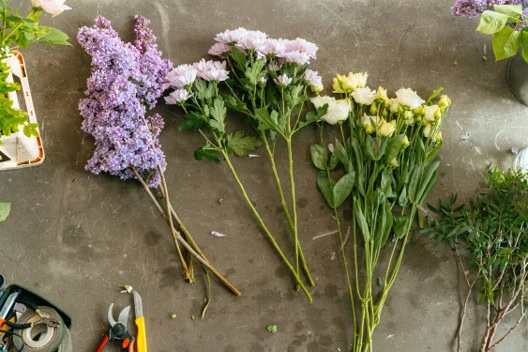
- Trim one inch from each stem at a 45-degree angle every two days.
- Change the water completely every 48 hours – bacteria build up fast.
- Add one teaspoon of sugar and two drops of bleach per quart of water to inhibit microbial growth.
- Keep arrangements away from fruit bowls – ripening fruit releases ethylene gas, which accelerates wilting.
Extension research on cut-flower care consistently shows that clean water plus a bit of sugar meaningfully extends bloom time compared to untreated tap water.
Seasonal flower calendar for budget-friendly styling
Buying in-season blooms saves 30–50% compared to out-of-season imports. Here’s a rough U.S. calendar:
| Season | Best Budget Blooms | Typical Cost per Bunch |
|---|---|---|
| Spring (March-May) | Tulips, daffodils, hyacinths | $5-$8 |
| Summer (June-August) | Sunflowers, zinnias, dahlias | $6-$10 |
| Fall (September-November) | Chrysanthemums, marigolds, celosia | $4-$7 |
| Winter (December-February) | White roses, amaryllis, paperwhites | $7-$12 |
Farmers’ markets often sell stems at 40% less than retail florists. The USDA Directory lists over 8,600 farmers’ markets across the country – chances are high that one operates within 15 miles of your home.
Color theory in 60 seconds
Monochromatic arrangements – all one color family – look polished without effort. Mix two to three shades of the same hue. Think blush, rose, and burgundy together. Analogous palettes (colors next to each other on the wheel, like peach and coral) also work beautifully.
Contrasting palettes demand more skill. Pairing orange ranunculus with cobalt delphiniums creates drama, but the arrangement needs greenery to bridge the two tones. My advice: start monochromatic, then experiment once you feel confident.
White blooms deserve special mention here. A cluster of white roses, white lisianthus, and white stock in a clear glass vase suits almost any room. Petal shape and size vary quite a bit from one variety to the next – some open wide, others stay tightly cupped – so it’s worth looking at a few before deciding which fits your personal aesthetic.
What makes this different from a Pinterest board?
Specificity. Pinterest shows gorgeous results but rarely explains the steps behind them. The competitor sites I reviewed focus almost entirely on product listings – rose types, pricing tiers, delivery options. None of them teach arrangement technique, seasonal strategy, or vessel pairing. That know-how turns a casual flower buyer into someone who confidently styles every room in the house.
Your next move
Start small. Grab one bunch this weekend. Pick a vessel you already own. Trim the stems, place them on your kitchen counter, and notice how the room feels different within minutes. Flowers don’t need perfection – just placement and intention.
I’ve found that the more you practice, the faster you develop a personal style. Some people gravitate toward wild, garden-picked looks. Others prefer tight, structured clusters. Neither approach costs more than the other. Both work.
Curious about building arrangements around a single flower type? Consider pairing white roses with eucalyptus or dusty miller for a soft, layered effect. The only rule that truly matters: enjoy the process.