

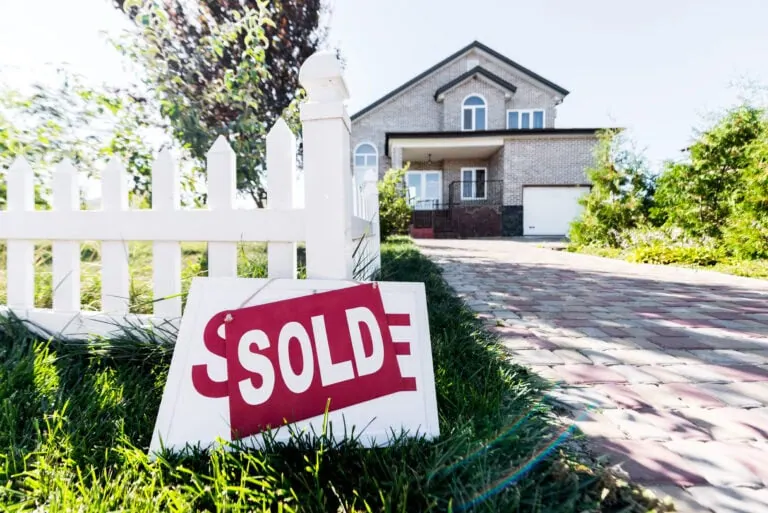
For many people, selling a home still follows a familiar script: tidy up, instruct an estate agent, host viewings, negotiate offers, then hope nothing falls apart before completion. It’s a route that works well in plenty of cases. But it’s no longer the only path homeowners consider.
Over the past few years, more sellers have looked at direct buyers as a practical alternative, especially when speed, certainty, or simplicity matter more than holding out for the highest possible offer. That shift doesn’t mean the traditional market is broken. It does mean that homeowners are weighing their options more carefully and choosing the route that fits their situation, not just the one they’re told is standard.
The traditional sale isn’t always straightforward
On paper, a conventional sale can look simple enough. In reality, it often involves a long chain of moving parts, many of which are outside the seller’s control.
An agreed offer is only the beginning. Buyers can pull out. Mortgage valuations can come in lower than expected. Survey issues can trigger renegotiations. Chains can collapse because someone further up or down the line changes their mind or hits a financing problem. Even in relatively stable markets, the process can drag on for months.
That’s fine if you have time, flexibility, and a property that shows well to a broad pool of buyers. But not every homeowner is in that position.
Life doesn’t always wait for the market
Some sellers are dealing with circumstances that make a long, uncertain process hard to manage. Divorce, probate, job relocation, financial pressure, or an inherited property needing work can all change the equation. In those moments, “best price in ideal conditions” may matter less than “reliable outcome without delay.”
That’s where direct buyers start to make sense for some people. They offer a different trade-off: less emphasis on open-market competition, more emphasis on speed and predictability.
Why certainty can matter more than squeezing out every last pound
One of the biggest reasons homeowners choose direct buyers is simple: certainty has value.
A fast sale isn’t just about impatience. It can reduce carrying costs, avoid months of mortgage payments, limit legal and maintenance expenses, and remove the emotional strain of a deal that keeps shifting. Sellers who have already moved, are covering two properties, or need to release funds quickly often calculate that a slightly lower offer may still leave them better off overall.
Around the midpoint of that decision process, many homeowners begin comparing different types of direct sale options, including online services and guaranteed home buying companies, to understand how timelines, fees, and offer structures differ. That comparison matters, because not all direct buyers operate in the same way, and the headline promise of speed can mean very different things in practice.
The hidden cost of “waiting for a better offer”
Holding out for a higher offer sounds rational, and sometimes it is. But there are cases where delay creates its own losses.
Consider a seller with a vacant property. Every extra month may bring council tax, insurance, utility standing charges, and the risk of deterioration. If the home needs repairs, the cost can rise while it sits unsold. In a softer market, waiting can also mean chasing buyers down as expectations shift.
This is why some homeowners view a direct sale less as a compromise and more as a form of risk management.
Direct buyers appeal to sellers with complex properties
Not every property fits neatly into the standard estate agency model. Homes with structural issues, dated interiors, lease complications, non-standard construction, or sitting tenants can be harder to market conventionally.
A typical buyer may be put off by the amount of work involved. Another may love the property but struggle to secure a mortgage. Viewings can pile up without producing a dependable result.
When “sell as-is” is the real advantage
For owners of tired or problematic properties, the ability to sell without refurbishing can be a major relief. There’s no need to redecorate for photographs, fund a new kitchen, or spend weekends getting the place “market ready.” That matters particularly in probate cases, where heirs may want a clean resolution rather than a renovation project they never asked for.
In that sense, direct buyers are not only offering speed. They’re also removing friction from the process.
Privacy and convenience play a bigger role than many expect
There’s another reason this route appeals: some homeowners simply want discretion.
Not everyone is comfortable with repeated viewings, for-sale boards, or neighbours tracking every development. High-stress personal situations often make privacy feel especially important. Selling directly can mean fewer people entering the property, fewer conversations to manage, and less public exposure overall.
Convenience also matters more than many industry insiders admit. Traditional sales often require preparation, staging, negotiation, and ongoing coordination. For busy families, older homeowners, or landlords offloading a difficult asset, a more contained process can be worth a lot.
It’s not the right choice for everyone
Direct buyers are not a universal solution, and pretending otherwise would be misleading. Homeowners with time on their side, a desirable property, and a strong local market may do better through an agent. If maximising sale price is the clear top priority, open-market competition usually gives you the best chance of achieving it.
The smarter question is not “Which route is best?” but “Best for whom, and under what circumstances?”
A useful way to think about it is this:
- Traditional sale: often best for price maximisation
- Direct buyer: often best for speed, certainty, and simplicity
- Hybrid decision: best made after comparing net outcomes, not just headline offers
That last point is crucial. Sellers should look beyond the offer itself and consider timing, fees, chain risk, repair costs, and the practical impact of delays.
How homeowners can make a sound decision
Ask better questions before choosing a route
Whether you’re considering an agent or a direct buyer, ask:
How quickly do I need the sale completed?
What will it cost me if the property takes three or four more months to sell?
Does the property need work that could limit buyer interest?
How much uncertainty can I realistically tolerate?
Am I optimising for price, speed, or peace of mind?
Those answers usually point to the right strategy faster than any sales pitch will.
A changing market means changing seller priorities
The rise of direct buyers reflects something broader in the housing market: homeowners are becoming more pragmatic. They’re no longer assuming that the traditional route is automatically the best fit. Instead, they’re matching the sales method to their personal circumstances.
And that’s probably a healthy shift. A home sale is rarely just a financial transaction. It’s often tied to change, pressure, and competing priorities. For some, the open market remains the ideal route. For others, certainty, privacy, and speed carry more weight.
Neither choice is inherently better. The value lies in understanding the trade-offs clearly, then choosing the option that solves the problem you actually have.