
By Matt Weber
Prepare the home for winter to save energy and heating costs by updating your insulation.
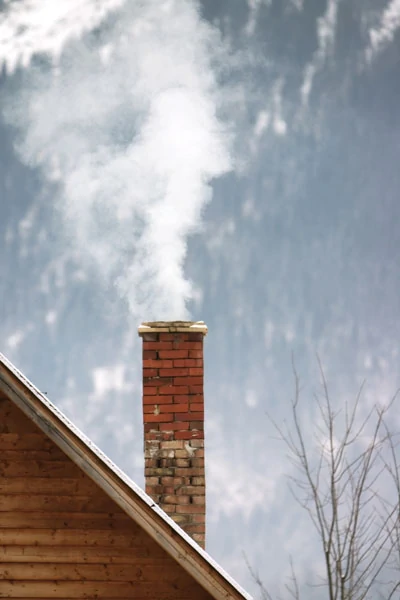
When we get cold, we reach for a blanket. We should do the same for our house. As the temperature falls, the heating bills rise, and older homes that were built in the glory days of low-cost energy don’t generally have the required amount of insulation and weatherproofing to heat the house at a reasonable cost. Even newer homes often have only the minimum insulation level to meet local building codes, rather than the preferred amount to heat the home most efficiently. (Lead photo copyright Dumitrescu Ciprian – Fotolia.com)
Using the appropriate amount of insulation for your area can reduce your heating usage up to 30 percent. Insulation levels are specified by R-Value, a measure of the insulation’s ability to resist heat traveling through it. The higher the R-Value, the better the thermal performance of the insulation.
The recommended insulation level depends on the geographic area of the home. According to the Department of Energy, the warm, southern areas of the country should have enough attic insulation to achieve a value of R-30 to R-60. The northern, colder areas of the U.S. require attic insulation of at least R-49 for the system to be cost-effective. The amount of insulation required to achieve a certain R-value depends on the type of insulation being used. For example, 3-1/2 in. of fiberglass will achieve R-13, while 2 inches of rigid foam polystyrene achieves R-10. The R-value will be printed on the package of the insulation product so you can easily calculate how much is required. R-Values of individual products can be added to achieve recommended levels. An R-38 added to an R-11 results in R-49.
Types of insulation range from fiberglass batts and rolls to cellulose, rock wool, spray-foam, rigid foam, various types of blow-in, loose fill, etc. Fiberglass is the most popular type for builders and homeowners.
DIY Insulation
To inspect the insulation of your home, start at the top and evaluate the attic insulation. The attic should have at least 12 inches of insulation. Then examine the exterior and basement walls, and finally floors and crawlspaces.
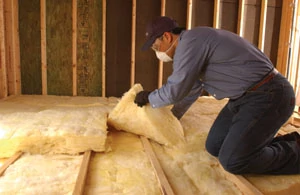
Unrolling fiberglass insulation can be an easy and inexpensive method to increase insulation levels. If you install additional fiberglass insulation over existing insulation, be sure to use unfaced rolls or batts. The facing acts as a vapor retarder that helps reduce the amount of moisture entering a wall, ceiling or floor. In hot climates, the original layer of insulation should already have a vapor retarder facing the living area of your home. If you add a second vapor retarder with another layer of faced insulation, any moisture that does get through the first layer may condense on the second. This can cause water stains on the ceiling and could lead to mold and structural damage.
When the joist cavity is full, install the second layer of unfaced insulation perpendicular to the first, covering the ceiling joists to reduce heat loss through the wood. Other-wise, install the second layer right on top of the first layer, between the joists.
To add insulation to enclosed walls, or to place a lot of insulation in narrow spaces (like between ceiling joists in cramped attics), you might consider blow-in insulation. Blow-in insulation can achieve uniform coverage even in hard-to-reach areas. This type of insulation is often misperceived as a “contractor only” job, because of the large equipment involved. However, blow-in insulation can easily be done by the do-it-yourselfer with a weekend to spare, and homeowners can rent machines to blow in the product from building suppliers such as Lowe’s. The process requires someone outside the house who feeds the insulation material, usually fiberglass, rock wool or cellulose, into a pneumatic machine where it is blown under high pressure through a long, flexible hose as another person directs it into the attic and walls.
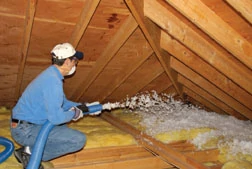
To fill enclosed walls with blow-in insulation, an access hole can be cut in the drywall near the ceiling to allow the insulation to fill the stud cavity. Once filled, the hole can be patched or concealed with trim moulding.
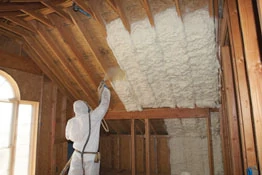
The newest option on the insulation market is spray-foam insulation, which has become increasingly popular in new construction when the exposed framing can be filled without obstruction. Spray-foam insulation installs fast and seals, soundproofs and insulates. In just seconds the foam expands to provide a flexible foam blanket of millions of tiny air cells, filling building cavities and sealing cracks and crevices. It dries quickly, and any excess material can easily be trimmed off, leaving a surface ready for drywall.
Most spray-foam products are dealer-installed and arrive on a truck with a lot of complex equipment to seal a whole house. However, some companies make products available to the do-it-yourself homeowner. For room additions, remodels and targeted areas in the attic and basement, companies such as RHH Foam Systems and Tiger Foam offer disposable self-contained polyurethane kits, which are engineered for professional duty but also easy to use.
Sealing Leaks
Just like poor insulation, air leaks represent money out the window. Drafts are often noticed around windows and doors, but in many homes the most significant air leaks are hidden in the attic and basement. In cold weather, warm air rises into the attic of the home just like a chimney. As it enters the attic, it leaves the leaving space, which you’re paying to heat. Furthermore, as the air rises, it pulls in cold air from other cracks and crevices in the home, around doors, windows and through the basement. The cold air requires your heating system to work even harder to maintain a constant temperature. In essence, air leaks in the home create a vicious cycle that drains away your energy and money.
Inspect your home carefully for leaks, which can be difficult to find when hidden beneath insulation. Some common problem areas include the attic hatch, wiring holes, plumbing vent, recessed lights and the soffit boxes that contain them. Check around the furnace flue or the duct chaseway (the box that hides the ducts).
Throughout the home, check indoor places such as heating and dryer vent penetrations, gaping baseboards and cracks along sill plates and floor-to-wall junctions. On the outside, look for leaks at the bottom of siding edges where they meet the foundation, along garage ceiling and wall joints, and all electric, gas and A/C penetrations. Also examine the basement rim joists and all windows and doors.

Professional home inspectors will conduct a home energy audit using infrared cameras and other sophisticated equipment. For an affordable DIY approach, it may be worth investing in an infrared thermometer, which is an easy-to-use, handheld electronic tool that can detect energy loss around doors and windows, insulation, ductwork and other areas throughout the home.
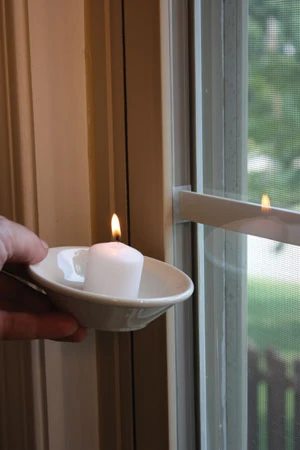
Another simple way to check for air leaks is to use a burning candle. On a cool, windy day, close all doors and windows and turn off the furnace. Turn on all the vent fans in the house to encourage the leaks. Light the candle and move it around the edges of doors and windows. Look for the smoke to flutter or flame to flicker, which indicates a leak.
Another DIY leak-detection method is to measure the temperature in different parts of the same room. If the temperatures differ more than 1 or 2 degrees, it’s probably a sign that the room is poorly sealed. Update with weather-stripping and/or caulking then retake the temperatures. (If the differences persist then you may have an airflow problem with your HVAC system.)
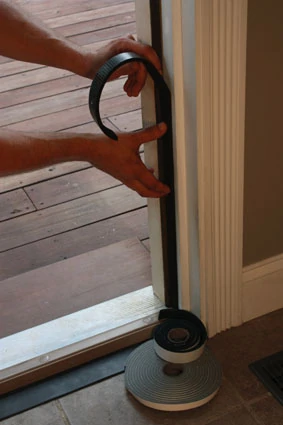
Without the proper weather stripping, caulking and storm windows, 20 to 50 percent of your energy costs are vanishing into the ether. While it’s true that homes need to “breathe,” that’s the job of vents, not leaky windows and doors. Seal leaks between moving parts (between door and frame) with weather stripping. Fill leaks between nonmoving parts (between window frame and wall) with caulking. You can seal up a house using a variety of products, such as caulk and foam backer rods, silicone or water-based sealants, rolls of open-cell foam or closed-cell foam.
Another popular sealant is spray-in expandable foam, similar to a handheld version of spray-foam insulation, which comes in an aerosol can for sealing voids around windows, doors, large gaps and more. A word of caution: It’s important to select the right insulating foam for the job, as the different types vary significantly in expansion size. Too much expansion in the wrong place can put unwanted stresses on whatever surrounds the foam.
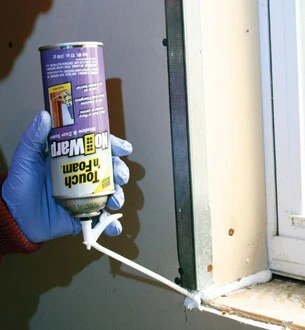
“Most foams are inappropriate for use around window and door frames because their excessive pressure can warp frames and jambs, rendering the window or door unusable,” explains Kevin Corcoran, marketing manager at Touch ‘n Foam. The company’s No-Warp Window & Door Foam Sealant is a low-pressure foam, specially formulated to insulate without exerting too much pressure to the frames.
For filling in larger cracks and gaps, Touch ‘n Foam’s MaxFill is the company’s maximum expanding product for sealing around gaping baseboards, siding edges, plumbing stacks and other big sealant jobs.
Further Steps for Winter Prep
Sealing off air leaks and installing adequate insulation are two of the most effective ways to reduce heating costs, but preparing the home for winter doesn’t end there. When giving your house its annual physical exam, keep your eyes peeled for the following:
Attic. Make a visual inspection of the attic interior, looking for evidence that the building envelope or weather seal of the house has been broken. Any such damage should be addressed before the problem can worsen. Check for wet or damp insulation and moldy, rotted attic rafters or ceiling joists, any of which could indicate a leaky roof.
Furnace. Heating can account for almost 50 percent of your family’s winter energy bill. To improve the efficiency of your heating system, change the filters frequently. Dirty filters force heating systems to work harder and raise heating costs. Also, clean air registers, baseboard heaters and radiators as needed.
Plumbing. First, familiarize your family members with the location of the home’s water main in the event they need to shut it off in an emergency. Then, insulate exposed plumping pipes and hose bibs. If you go on a winter vacation, be sure to leave your heat set to at least 55 degrees.
Roof and Gutter. An ice dam is a ridge of ice that forms at the edge of a roof and prevents melting snow from draining, causing backed up water that can leak into the home. Clean your gutters to ensure proper drainage and clear any potential blockage. Installing gutter covers can help prevent accumulation of debris. Proper attic ventilation removes heat and keeps the roof deck evenly cool to prevent melting.
Windows. Ideally, you should have double-pane and low-emissivity coated windows, which reduce energy usage by 34 percent compared to uncoated single-pane windows. But a million bucks in the bank would also be nice, right? Times are tight, and new windows aren’t always in the budget. For wooden frame windows, consider covering the outside with heavy plastic to reduce cold air infiltration. Staple the sheeting over the outside, leaving a 4-in. overhang around the perimeter. Secure the edges with wooden furring and fasten to the outside window frame. Trim off the excess plastic.
Another option is to purchase shrink plastic designed for the inside of the windows. Apply the double-sided tape to the perimeter of the window frame. Attach the plastic, beginning at the top and working downward, pressing the plastic toward the edges. Shrink the plastic with a hair dryer and make sure all the edges are sealed securely with the tape.
Channel the Sunlight. It’s simple and cheap: Leverage the sun’s rays. To help keep the house warm, keep blinds and drapes drawn on south and west facing windows during the day. Close them at night to conserve heat.
SIDE NOTE: Energy Savvy Innovations
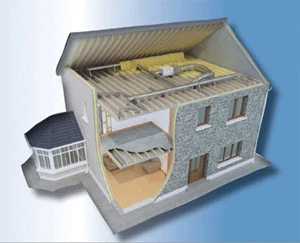 Hi- Velocity High-pressure Heating and Cooling
The Hi-Velocity System from Energy Saving Products Ltd is an energy-efficient, high-pressure air delivery system that can be designed to provide heating, cooling, filtration, ventilation, humidification and dehumidification. The Hi-Velocity System works on the principle of pressure rather than air velocity. Unlike a conventional furnace, the supply duct work is all ‘small diameter” or “mini duct.” With the use of a high-pressure area to low-pressure area, the air in the room is continuously mixed, creating even temperatures from floor to ceiling. Because the plenum duct is pressurized, dust buildup within the ductwork is eliminated. With continuous air circulation from the constant fan, airborne dust and other allergens can be easily filtered out of the air. The innovative fan coil and unique cooling technology help create a healthier and more enjoyable indoor living environment. Save money on monthly operating costs by programming the system’s Energy Smart Variable Frequency Drive Motor. Learn more at www.hi-velocity.com.
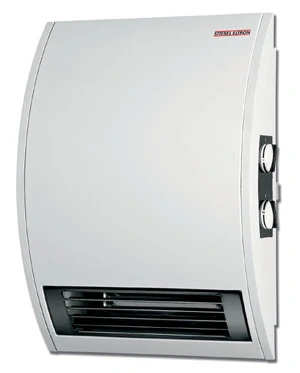 Stiebel Eltron CK and CKT Electric Fan Heaters
The new Stiebel Eltron CK and CKT wall-mounted electric fan heaters are ideal for new construction and renovation projects in bathrooms, kitchens, bedrooms, garages and more. Each heater features a built-in thermostat (adjustable from 41 to 86 degrees F), a frost-protection setting designed to keep a room just above freezing temperatures, and the modern design styling typical of the Stiebel Eltron product line. The new CKT extends the list of features by adding a 60-minute timer. Set up to an hour of high-output heat to quickly warm a room. When the timer goes off, the CKT will use the previous thermostat settings to make sure your room stays the temp you want. The CK series of heaters are available in four models, from a 120V/1,500-watt unit to a 240V/2,000-watt unit. The fan provides for extremely quiet operation (53 dB), and the heater is equipped with safety high-limit temperature protection. Learn more at www.stiebel-eltron-usa.com.